Hello! It’s good to be writing again and even better to be traveling again. In my last several posts, I wrote about my college graduation trip across Italy, Greece, and Prague. It’s been about 6 months since then, and the itch to travel has returned!
I wrote this article halfway through my time in Peru and I am excited to share my experiences! I’ll write several posts to cover different topics: rural Peru in the Quispicanchi region (this article), the Incan capital of Cusco, my 5 day / 5 night trek through the Salkantay pass, and touring Machu Picchu.
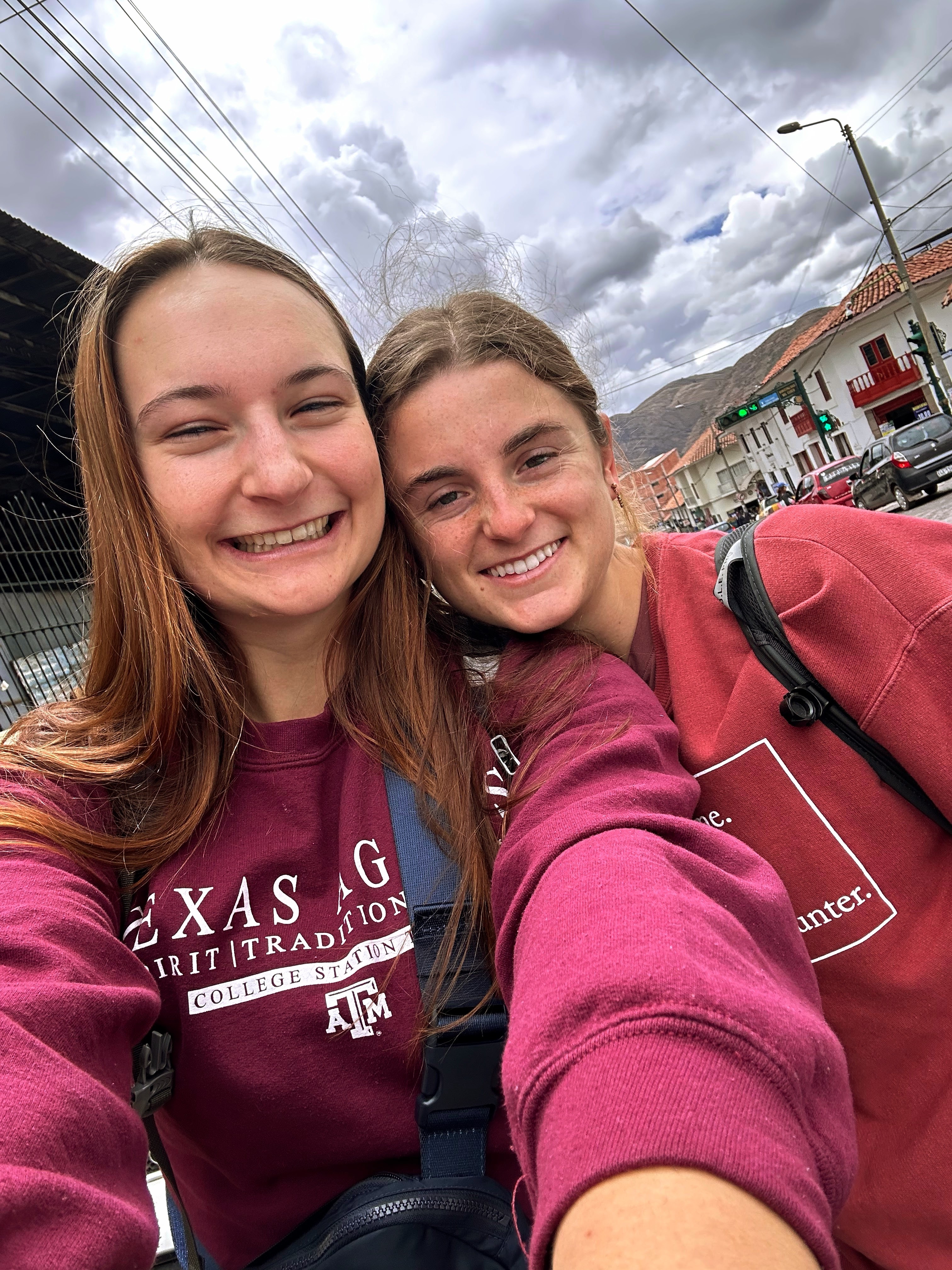
In the spirit of Thanksgiving, I want to share my gratitude for those who supported me throughout planning this trip: my parents, for instilling in me the desire to explore the world; my manager, for approving two weeks off after Thanksgiving; and for my dear friend, Riley, for hosting me during the first week of my trip. Thank you, muchas gracias!
Arrival in Peru
I arrived in Cusco on Monday morning, and Riley met me at the airport. Riley and I met through St. Mary’s Catholic Student Center at Texas A&M, and we were often on the same team for intramural sports. She is spending her gap year before medical school serving at a rural, Jesuit elementary school with the Quispicanchi Project (keys – pee – KAHN – chee). Visiting her was my main reason for traveling to Peru! When else will I have an excuse to visit South America and hike to one of the Seven Wonders of the World?! Riley challenges me to live more simply, makes me laugh till I pee myself, and is always eager for an adventure. It was a joy to visit her for a week!
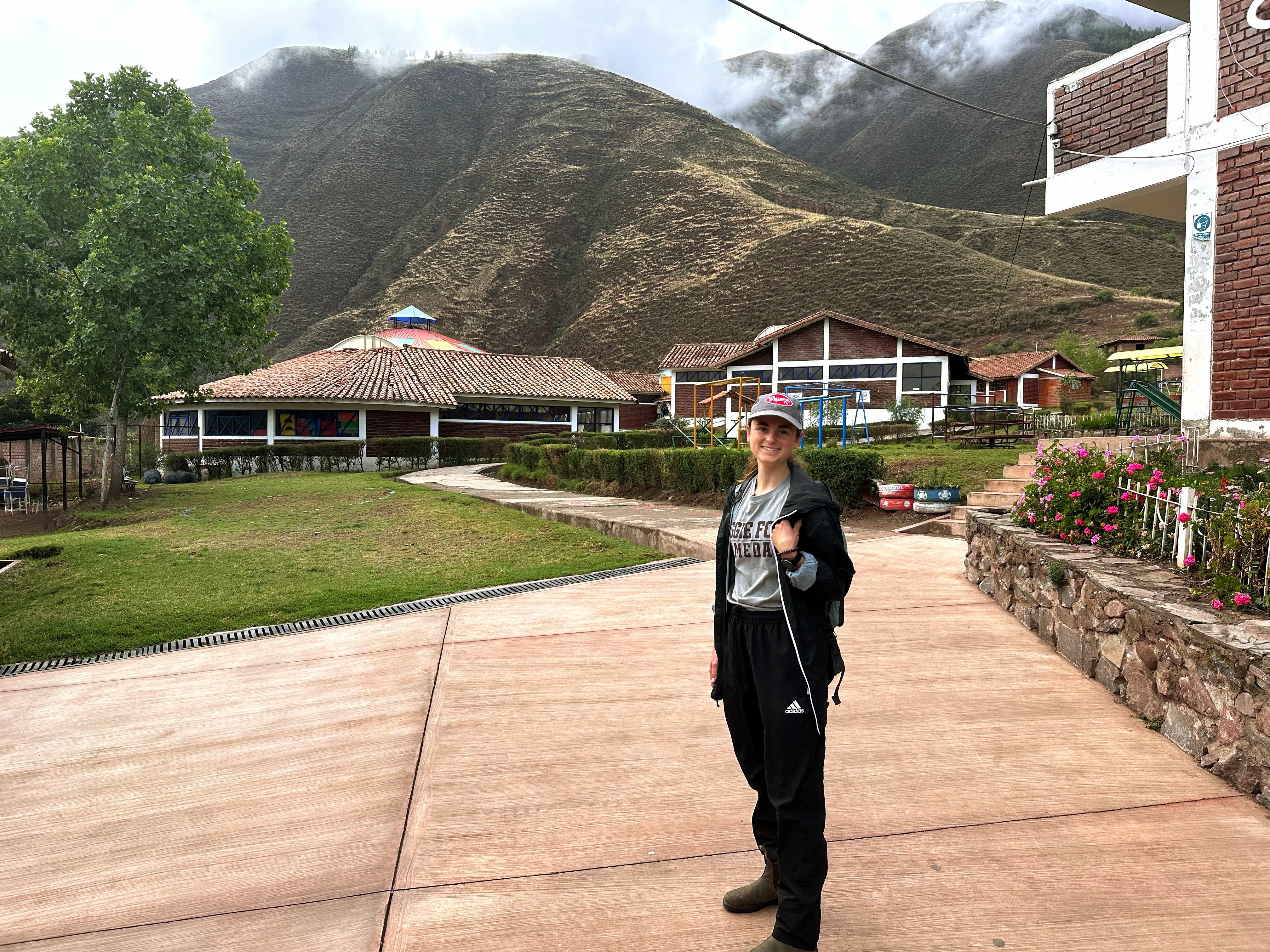
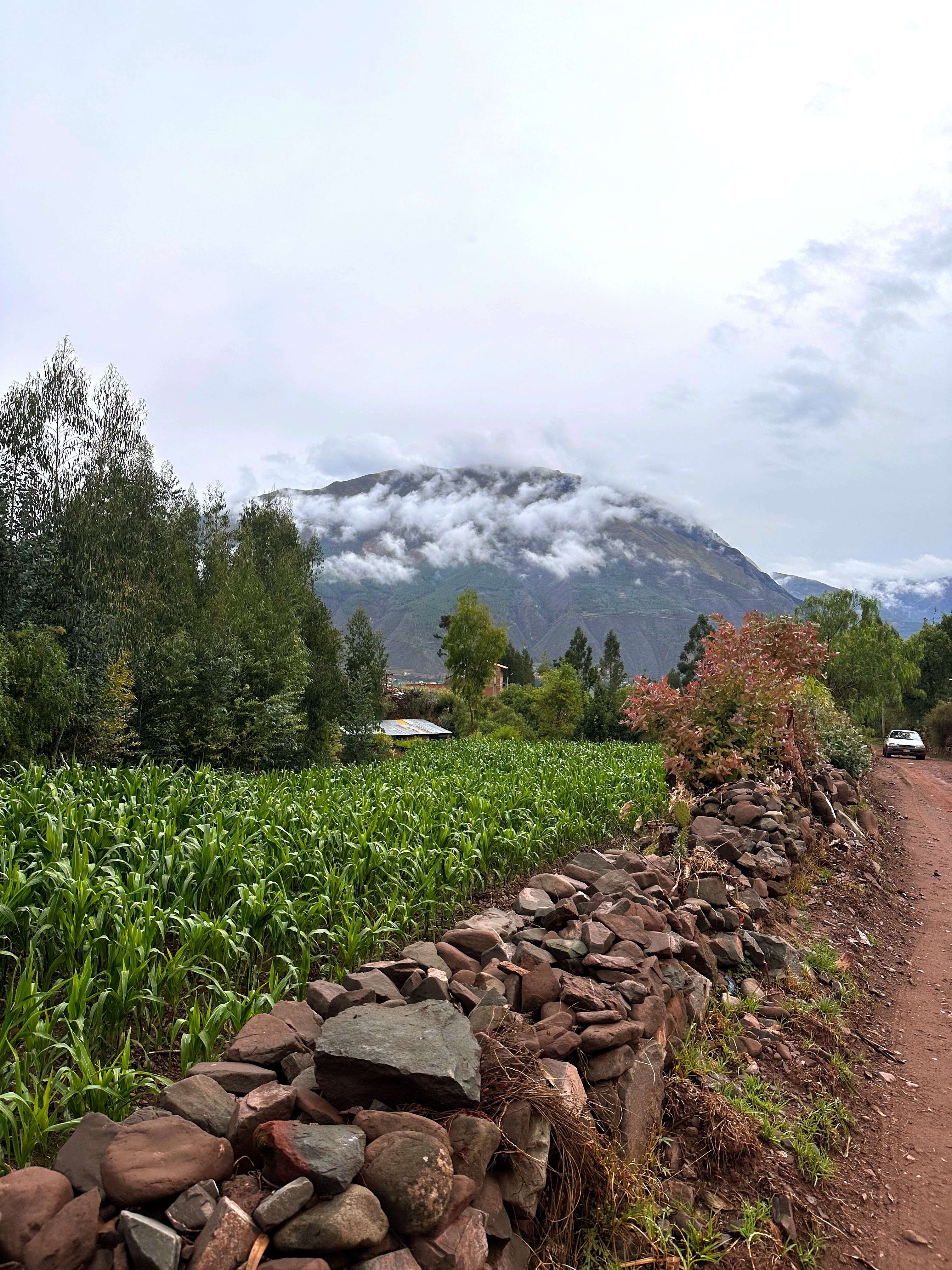
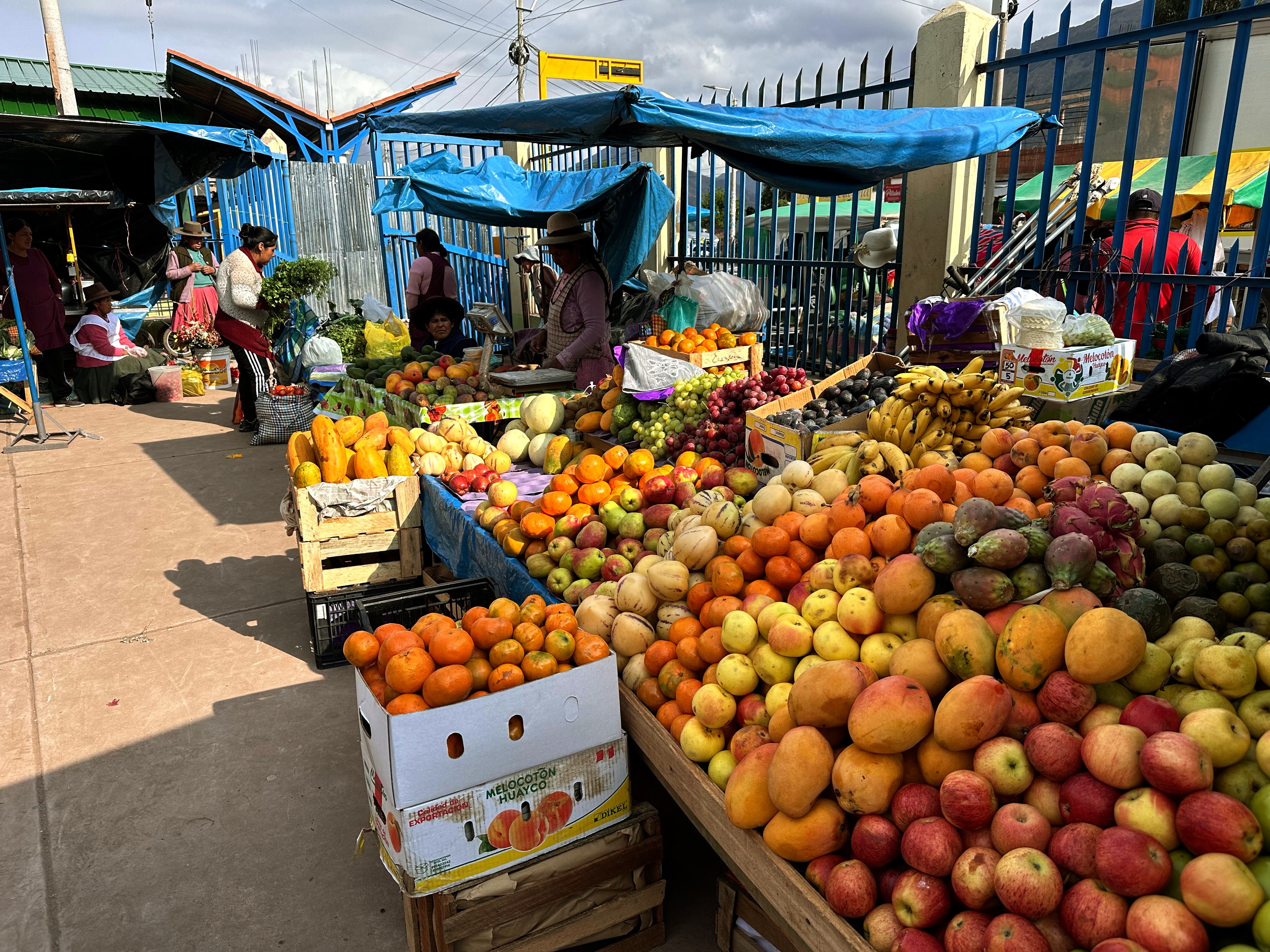
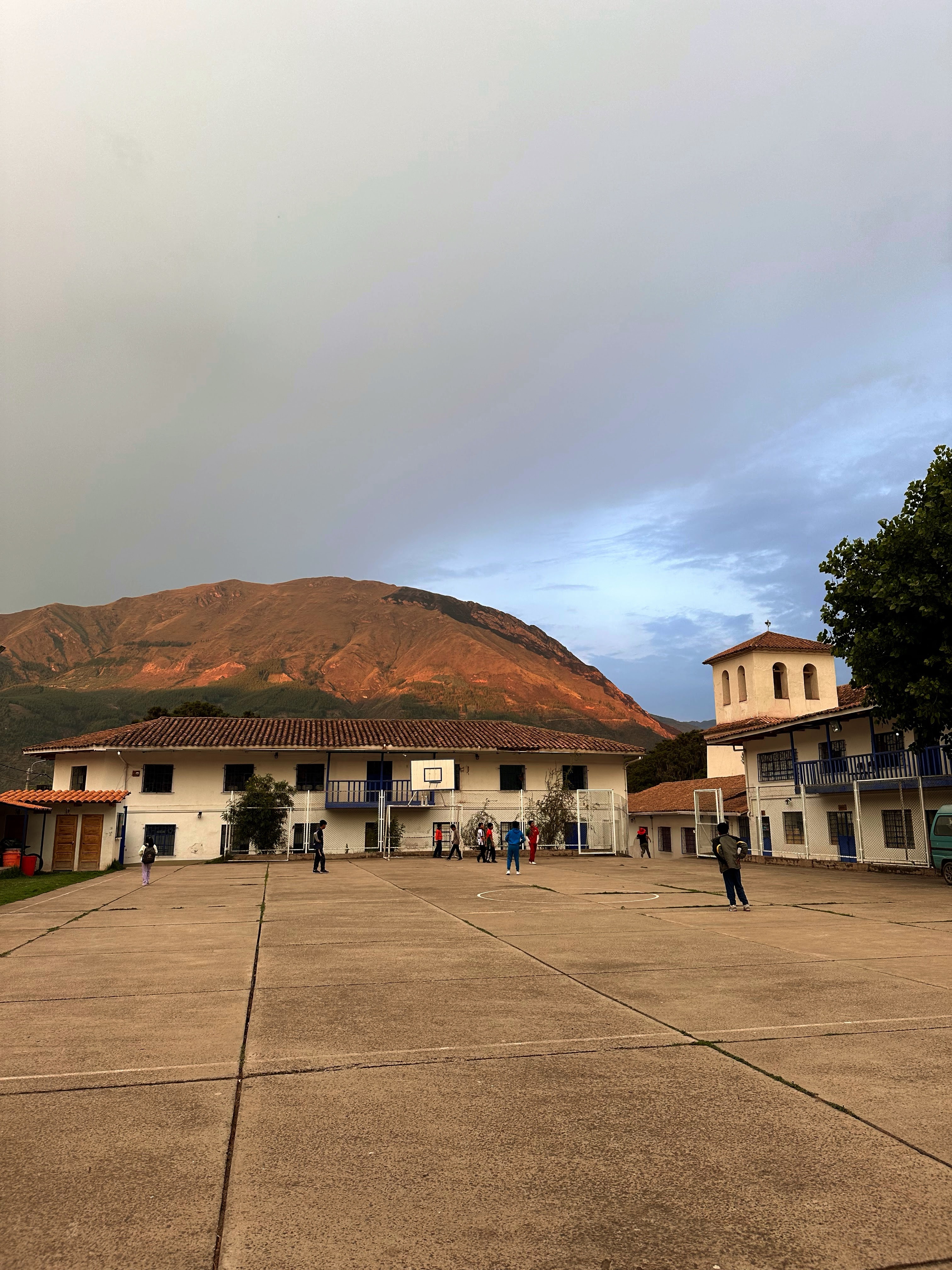
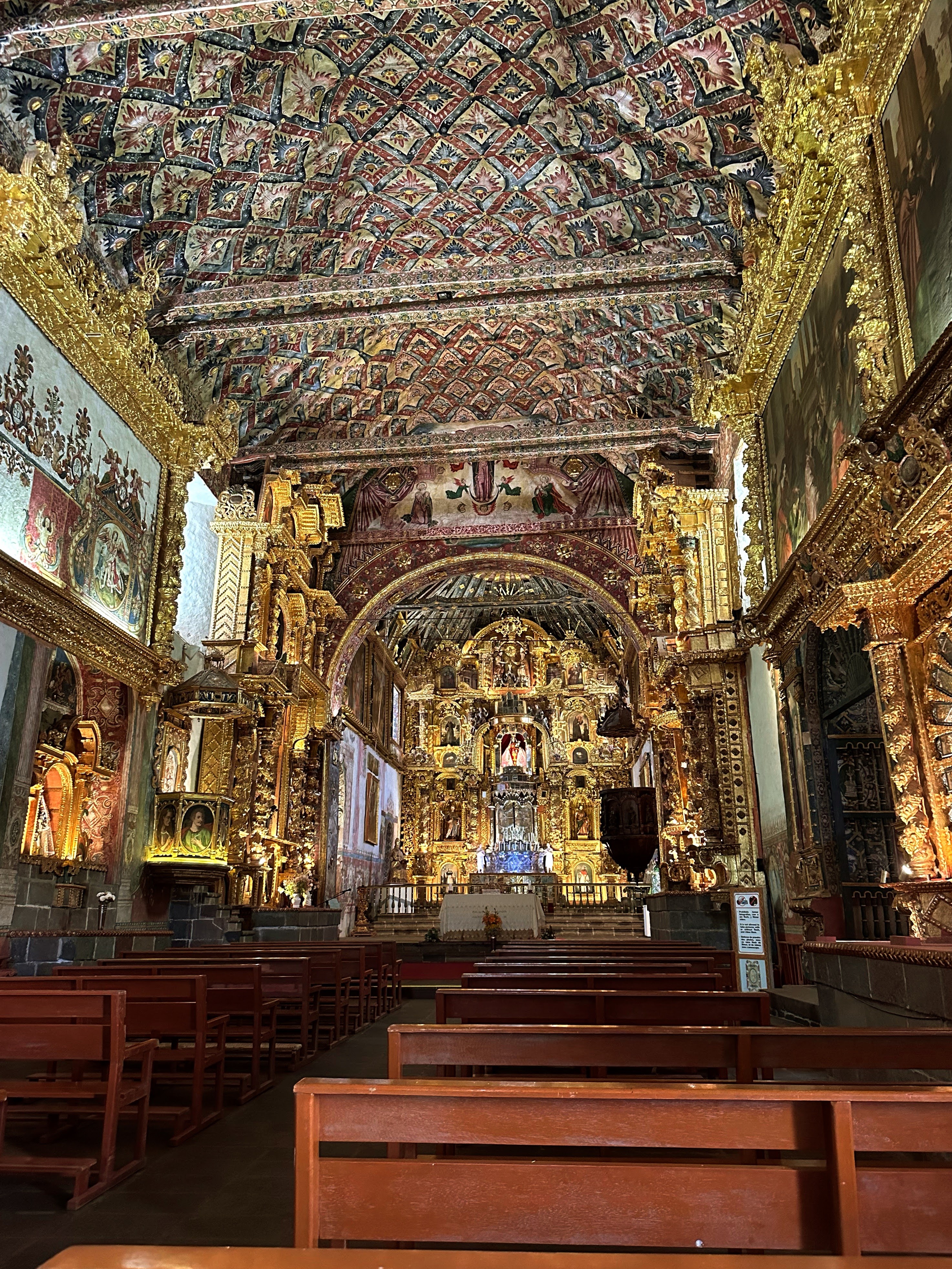
After exploring Cusco for the day, we took an hour-long bus to Andahuaylillas (Ahn – da – who – ale – ee – yas). In this small town, nobody speaks English, and the parish center is the only spot with WiFi. Riley is fluent in Spanish and gave me a few lessons to improve the little I know. St. Peter’s church in Andahuaylillas, built in the 16th century, attracts some daytrippers from Cusco because it is considered the Sistine Chapel of the Americas. Only the main roads are paved and as of last week, the sidewalk curbs are now hand-painted yellow.
School Days
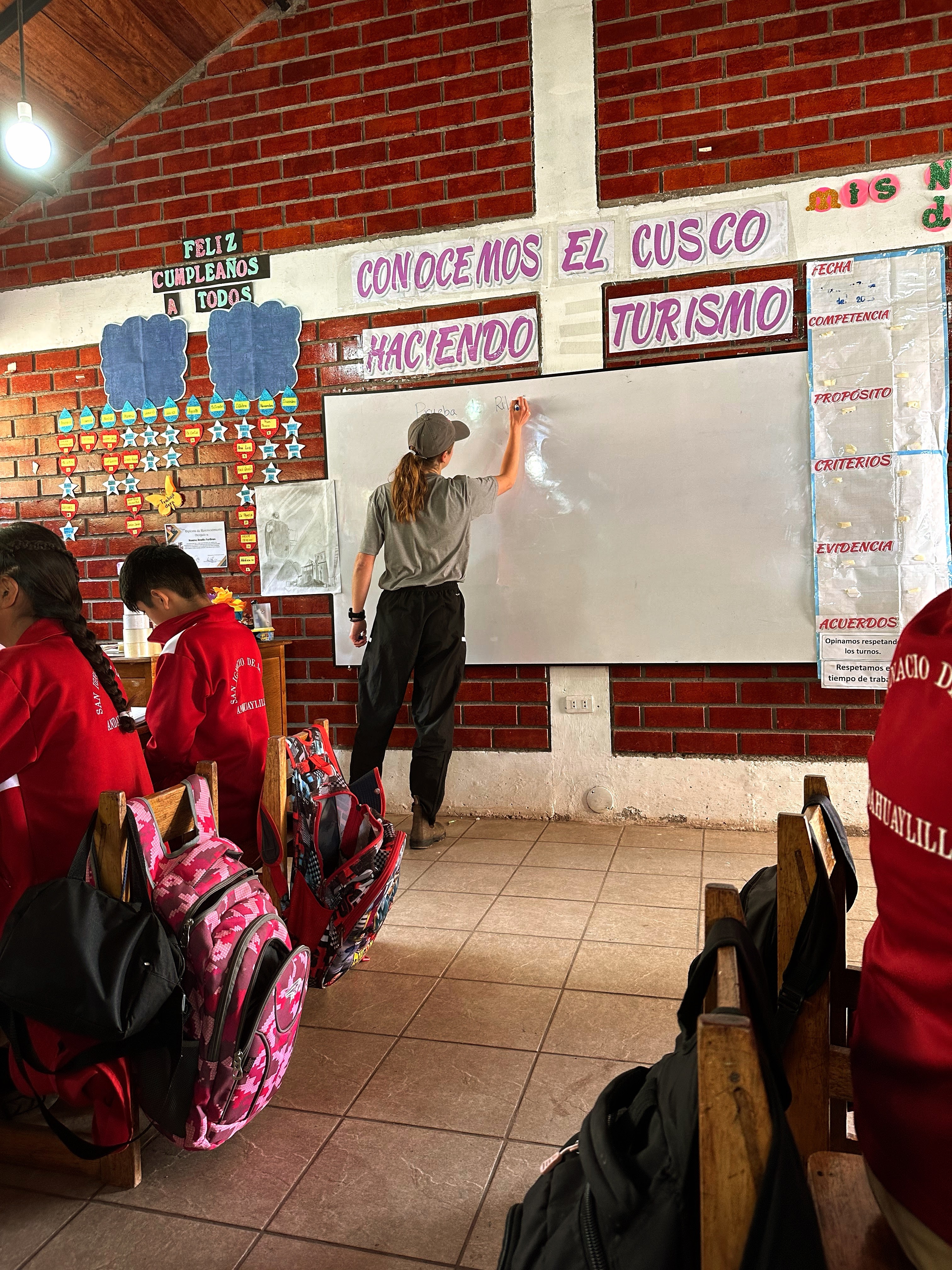
On Tuesday, Wednesday, and Thursday I worked at the elementary school with Riley. As a volunteer, she serves where she is needed. This week, we spent a day each in the kitchen, in a second grade classroom, and as the PE teachers.
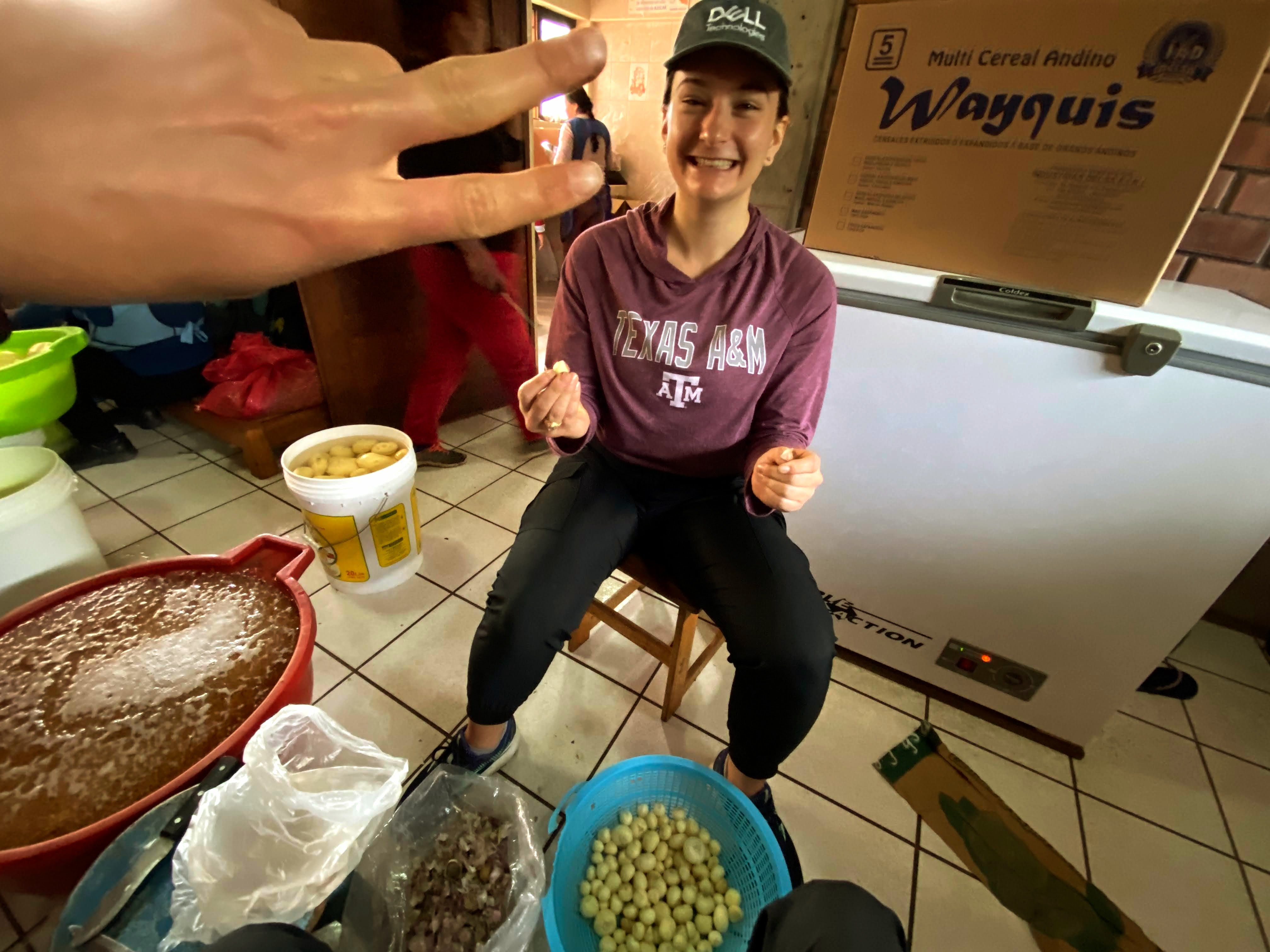
In the kitchen, we helped prepare the ingredients for the breakfast and lunch served to the students. We shelled peas, peeled garlic, and washed the massive pots. It took us a long time, but the time flew by because we had great conversations doing the tedious tasks.
There were six other women in the kitchen – two women managed the stove, and the other four women prepared the vegetables with us. It was interesting to hear them converse in a mix of Spanish and Quechua. Quechua is the native language, and it is mostly heard in rural areas in Peru and Ecuador. When the Spanish arrived in the 16th century, they instituted a written form of Quechua (which didn’t exist before) with the Spanish alphabet. In the Spanish language, there are many “o” and “a” ending words. In Quechua, the main sounds are “ich”, “atch”, and a clicking sound that breaks up some words. Needless to say, I was fascinated with the language, and I asked the kids to teach me the numbers through ten and the words for body parts in Quechua. Fun fact, some Quechua words made it to English, such as jerky, poncho, puma, and quinoa.
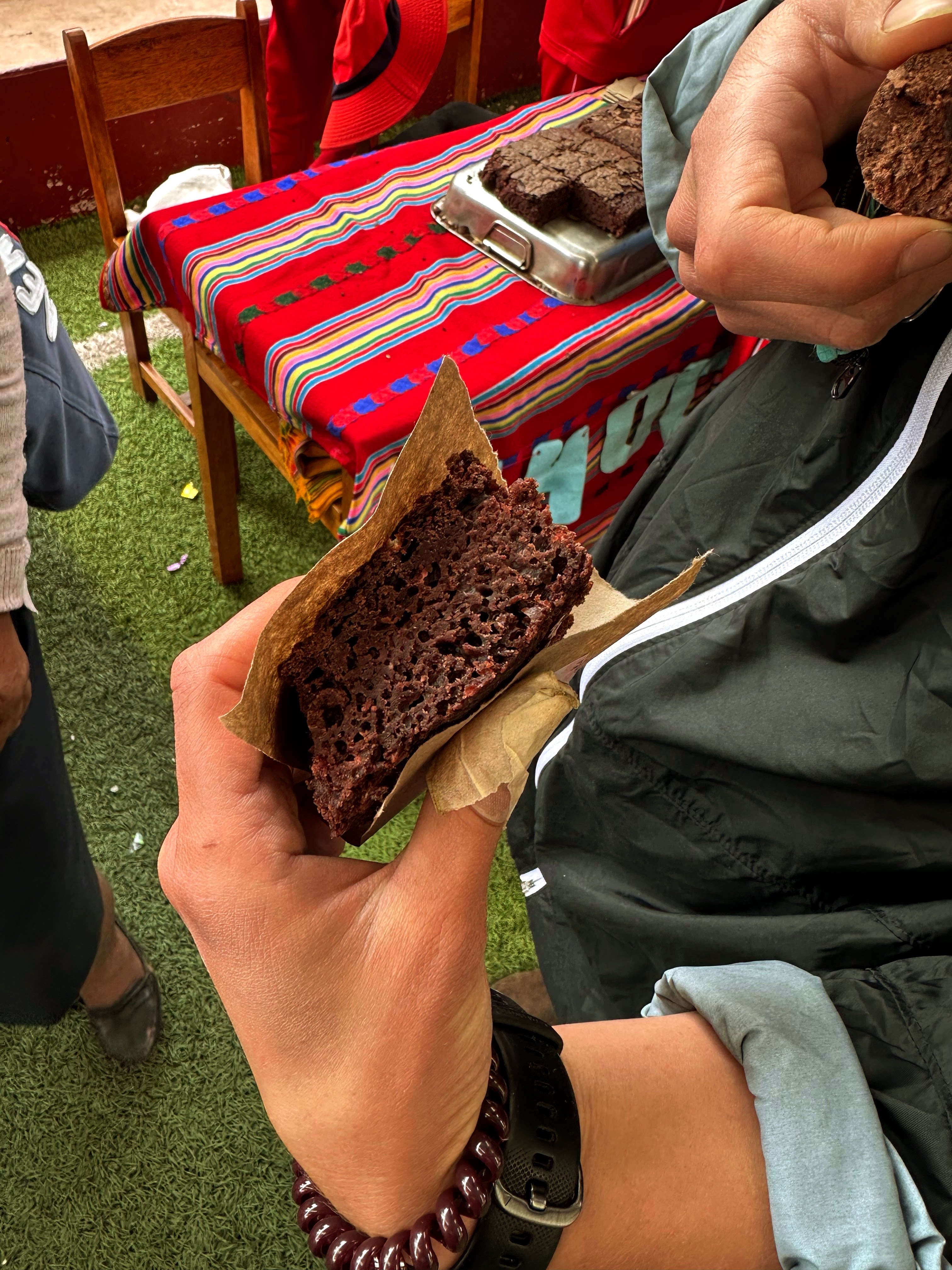
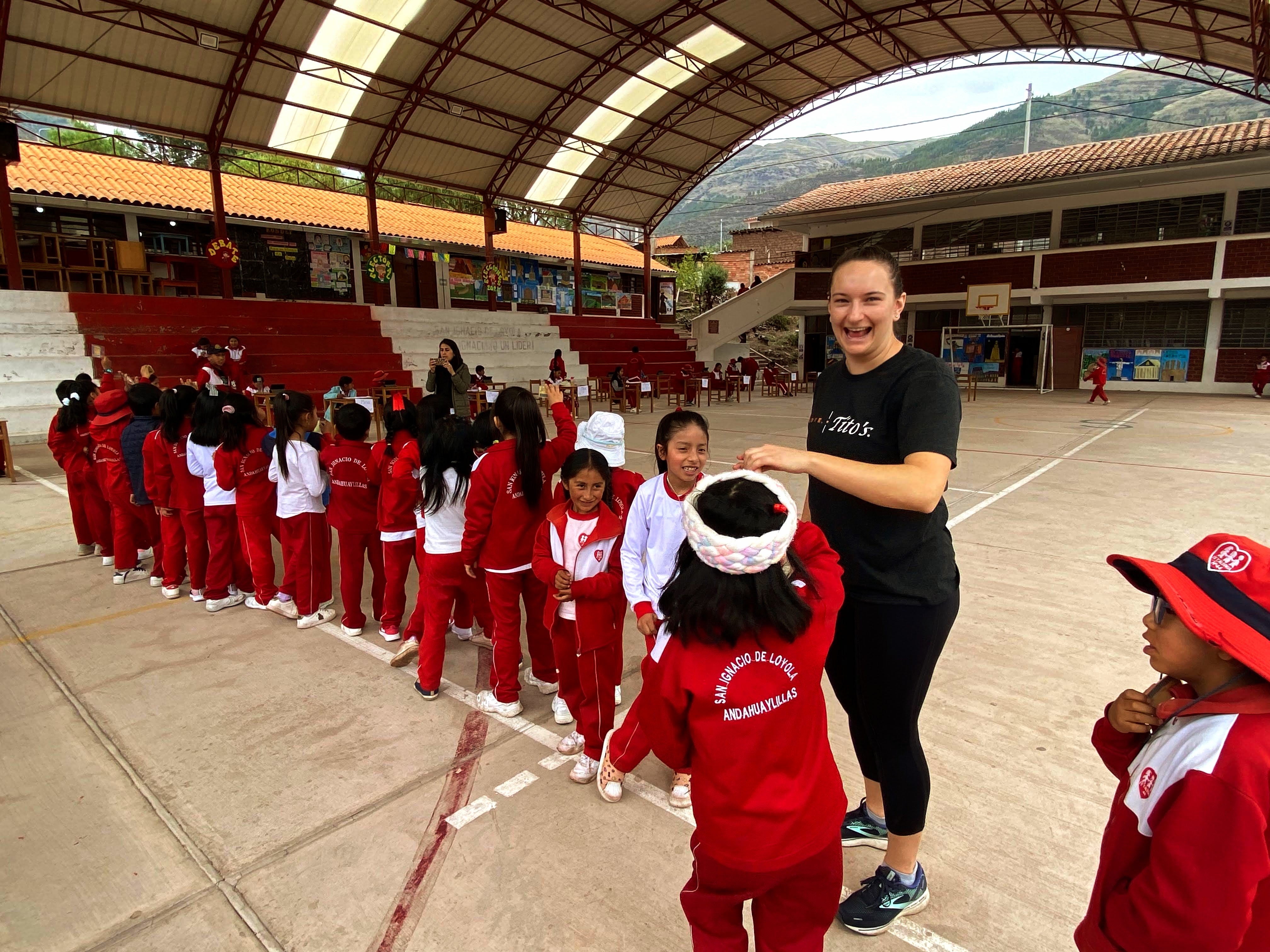
On Tuesday, the Jesuit high school hosted a bake sale and we went with the elementary school kids. We tried blood brownies (“sangrecita”), orange cake, and stuffed chili peppers (“rocoto relleno”). I’ll write more about the food in another post. 🙂
In the classroom, we helped the kids with their schoolwork. I learned that my Spanish is at least at the second-grade level because I could answer their questions. When I wasn’t helping the kids with their work, the students interviewed me about the United States, asked me to translate words into English, and asked why I am so tall (because I eat lots of vegetables and meat).
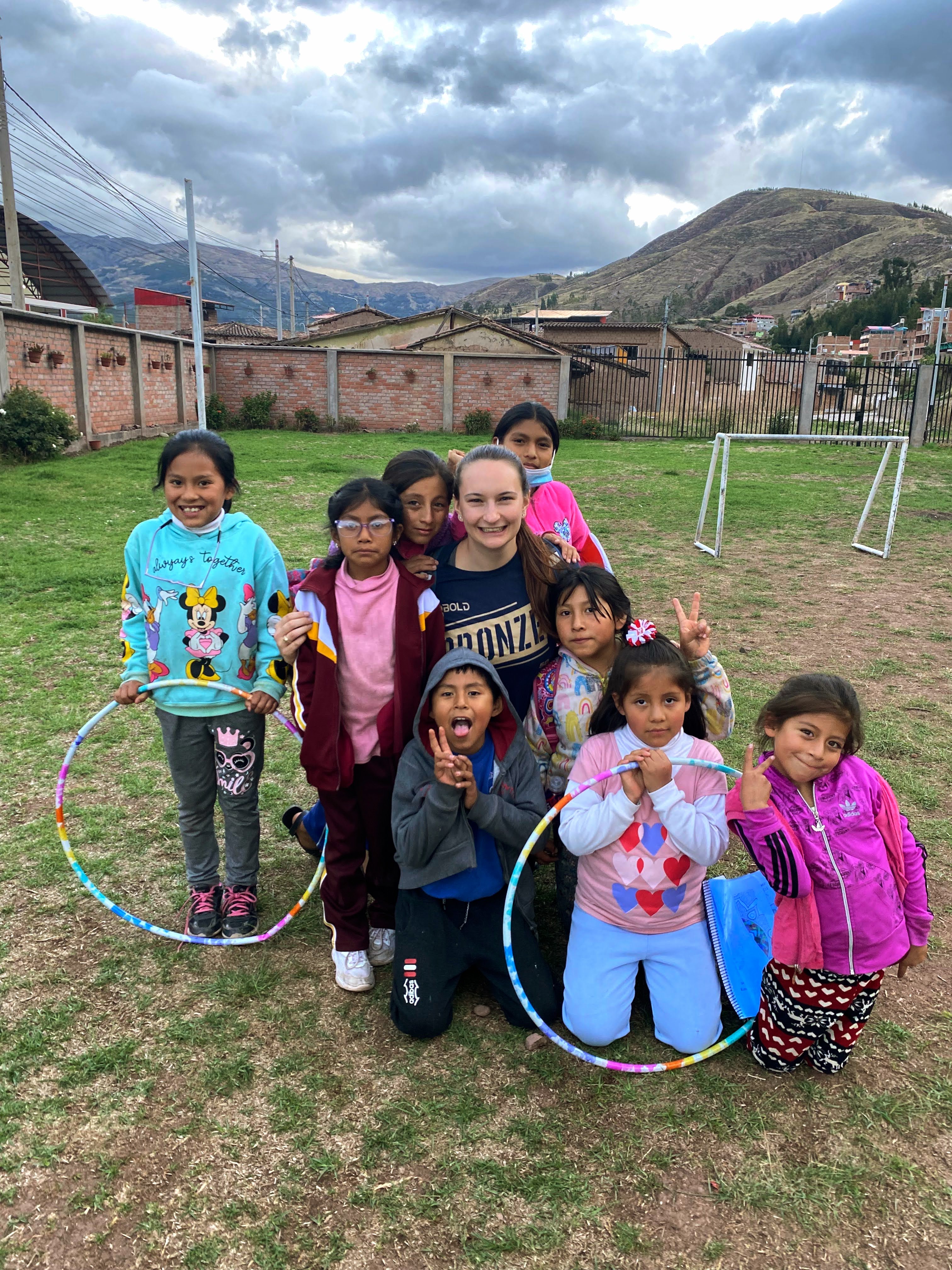
After each day in the school, we had a short siesta before riding a bus to Urcos, the capital of the Quispicanchi region. Here, Riley serves at the after-school daycare at the church. Riley helped the students with their homework, and I played soccer with the boys outside. The best part about not speaking Spanish here is that I don’t have to listen to the kids argue, and the kids know I’m useless in solving their petty conflict.
That’s it for now! Stayed tuned for a post on Cusco and Peruvian food.
 kira vesta
2 thoughts on “Peru, pt. 1”