At this point, I’m getting the hang of causally traveling to another country for a quick weekend trip. Although I did leave my coffee thermos on the train to Budapest. And my journal in the hostel in Haarlem… some things never change.
On the train to Budapest from Prague, I chatted with two women from Ukraine. I enjoyed talking to Ira and Lena, and they were adamant that I practice my Russian. They are temporarily living in Budapest apart from their husbands and sons. Like any emotionally heavy situation, I didn’t know what to say when the conflict came up, and the conversation became awkward. We chatted mainly about their daughters, who are the same age as me, and they proudly shared photos.
In Budapest, I met up with Rachel (the same friend who traveled to Bruges with me). We organized our own walking tour to see as much of the city as possible in two days. We began along the Danube River and peeped into the Church of Our Lady of the Assumption, where there was Eucharistic Adoration in the side chapel. Agreeing that this was the best way to begin our day, we spent time in silence with the Eucharist before continuing our walk. I will never tire of seeing old, European, and beautifully maintained churches open to the public, especially with the Eucharist exposed.
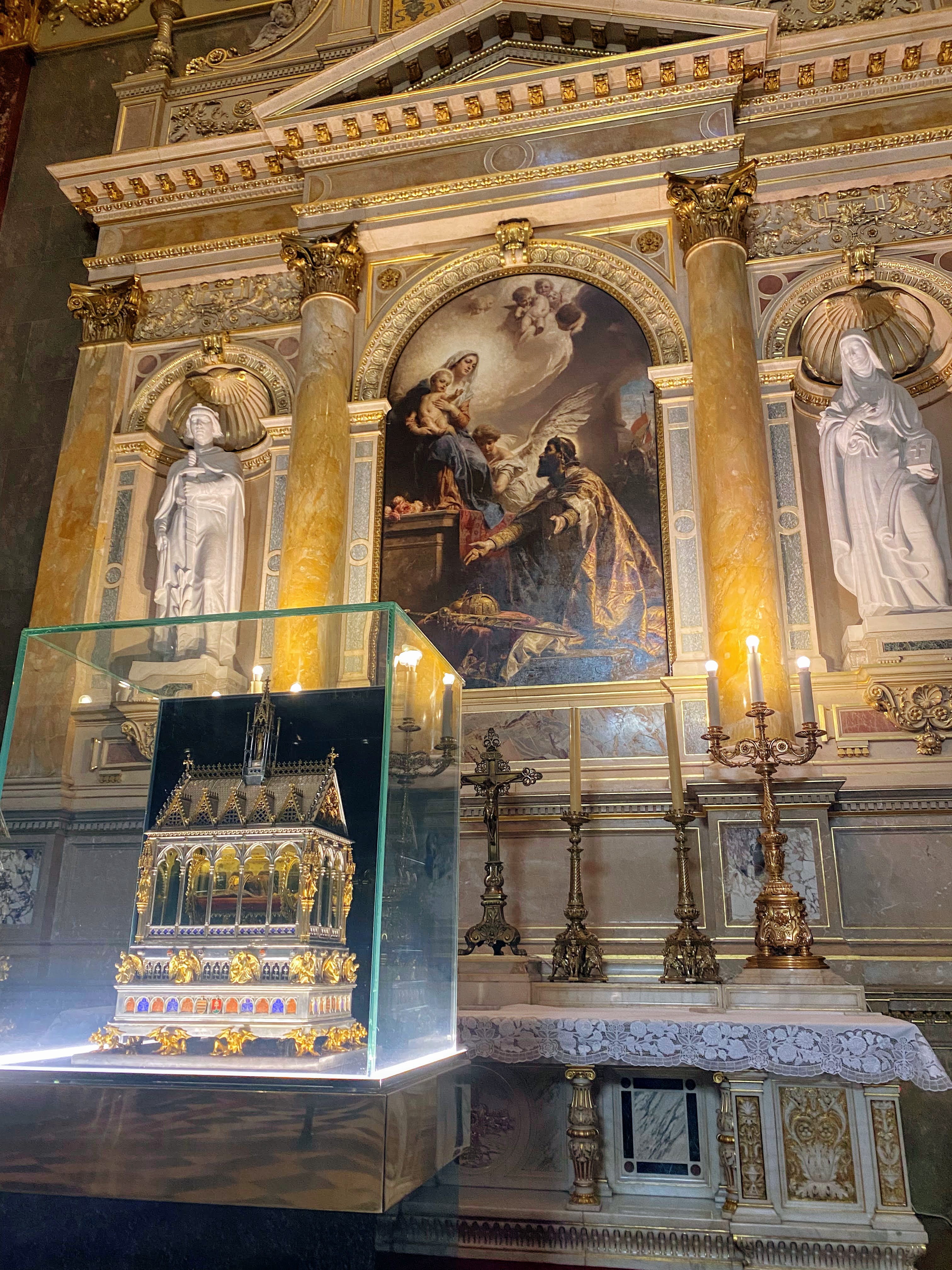
Our first destination was St. Stephen’s Basilica, and we saw the largest relic I’ve ever seen- the Holy Right Hand of King St. Stephen of Hungary. (Is it obvious we are Catholic?) When St. Stephen’s corpse was exhumed during the process of canonization, the examiners found that his right arm did not decompose. Naturally, they turned his right arm into a relic. Other notable features of the Basilica include the massive organ, the panoramic lookout from the dome, and the statue of St. Elizabeth of Hungary (one of my favorite saints). The altar was also magnificent, even with the cross and tabernacle clothed in purple to match the Lenten season.
After visiting the Basilica, we went to New York Café for brunch. I heard Budapest is even cheaper than Prague, but this was not the case here. I think the prices reflect the elegant artwork, live classical music, and ambiance of the café more than the food. Still, it was cheaper than our average meal in Vienna.
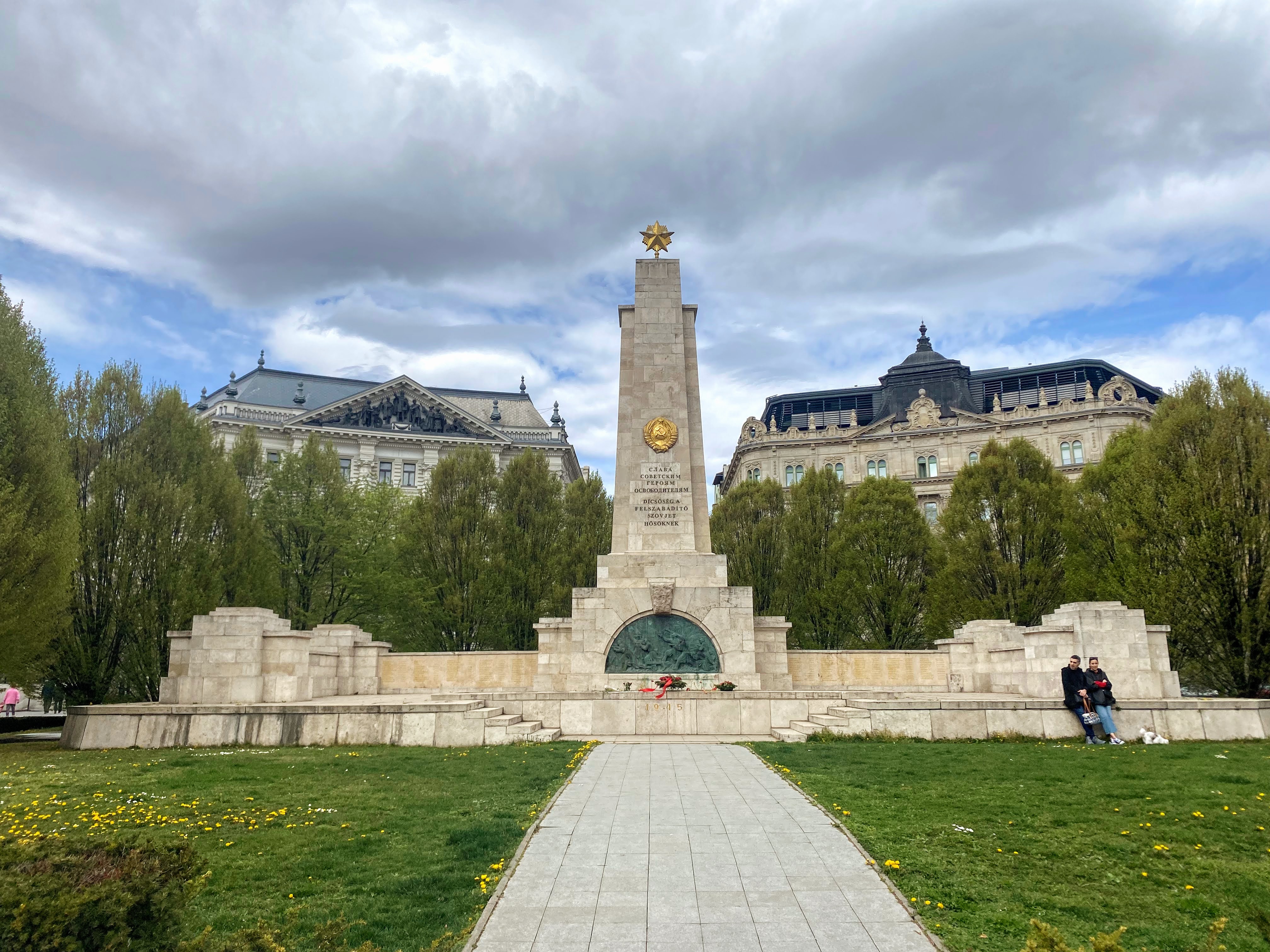
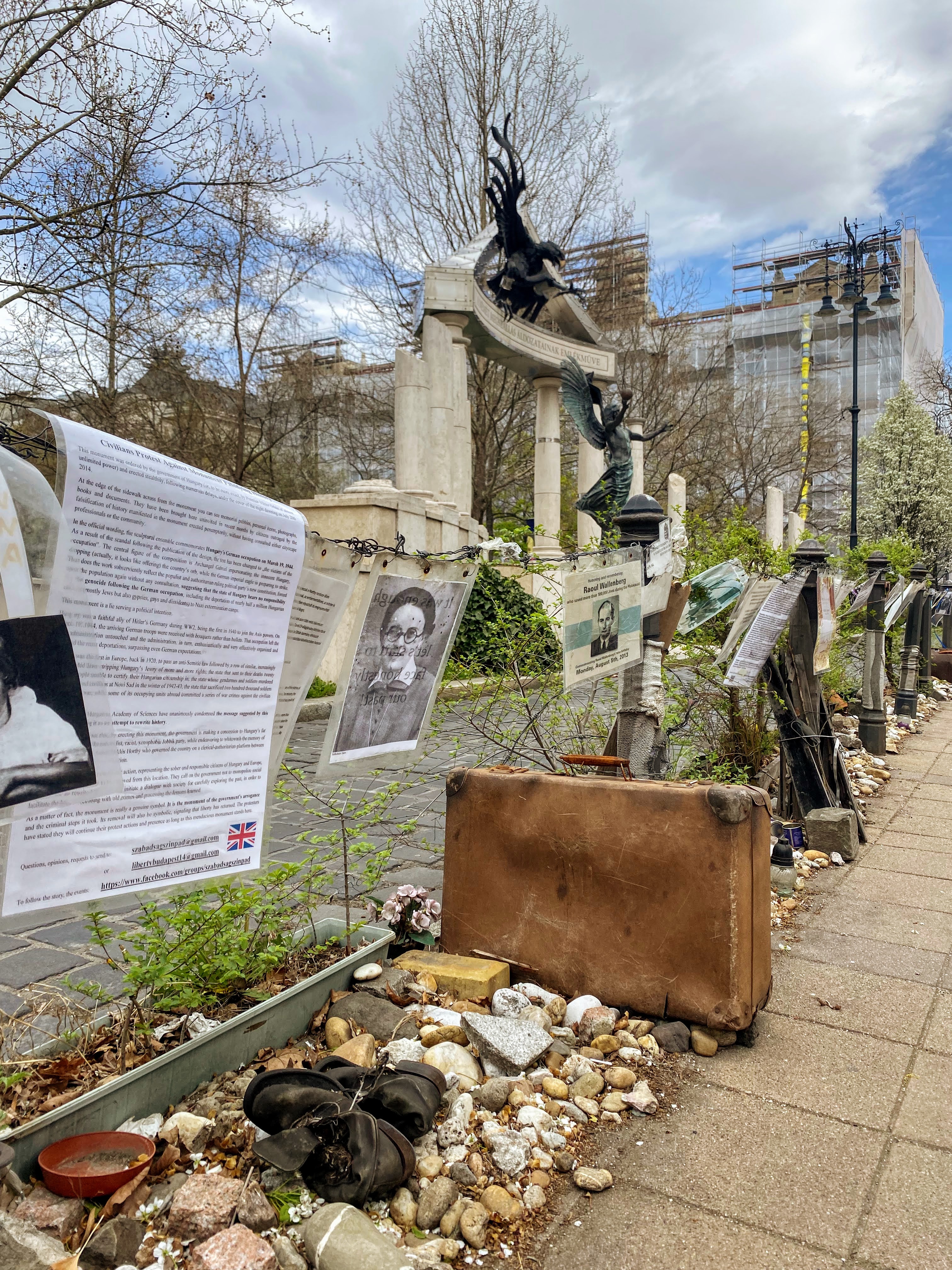
Like Prague, Budapest has many statues, monuments, and small tributes to historical figures sprinkled around the city. In the photo of me on the bench, I am sitting next to Imre Kálmán, a Hungarian operetta composer. I know nothing about his story, but I like his statue on Nagymező street! Some of the monuments are controversial among native Hungarians, such as the Soviet War Memorial and the Germany Occupation Memorial. Both are located near the Parliament and the US Embassy and facing the Soviet War Memorial from behind, are statues of Ronald Regan and George H.W. Bush.

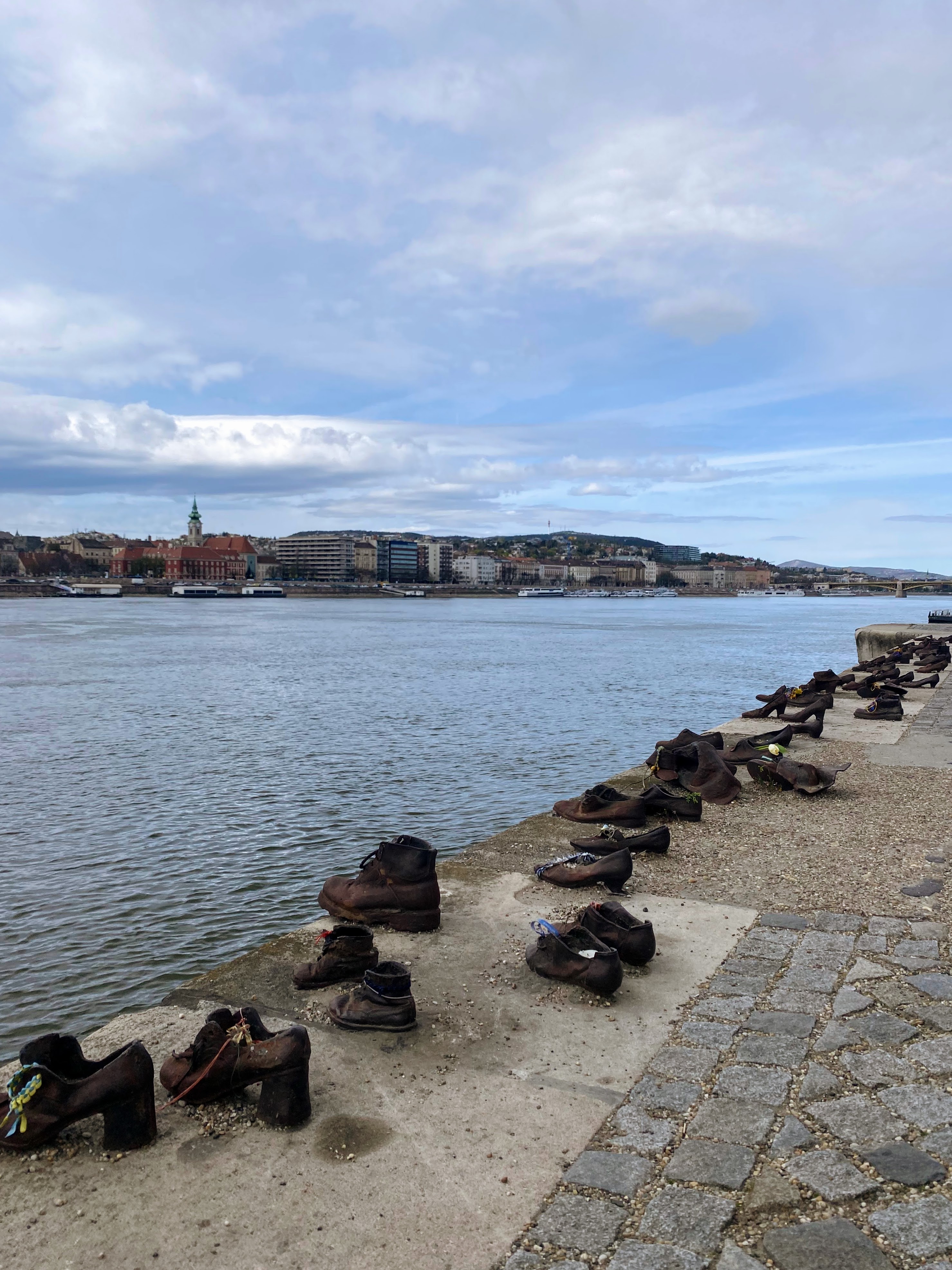
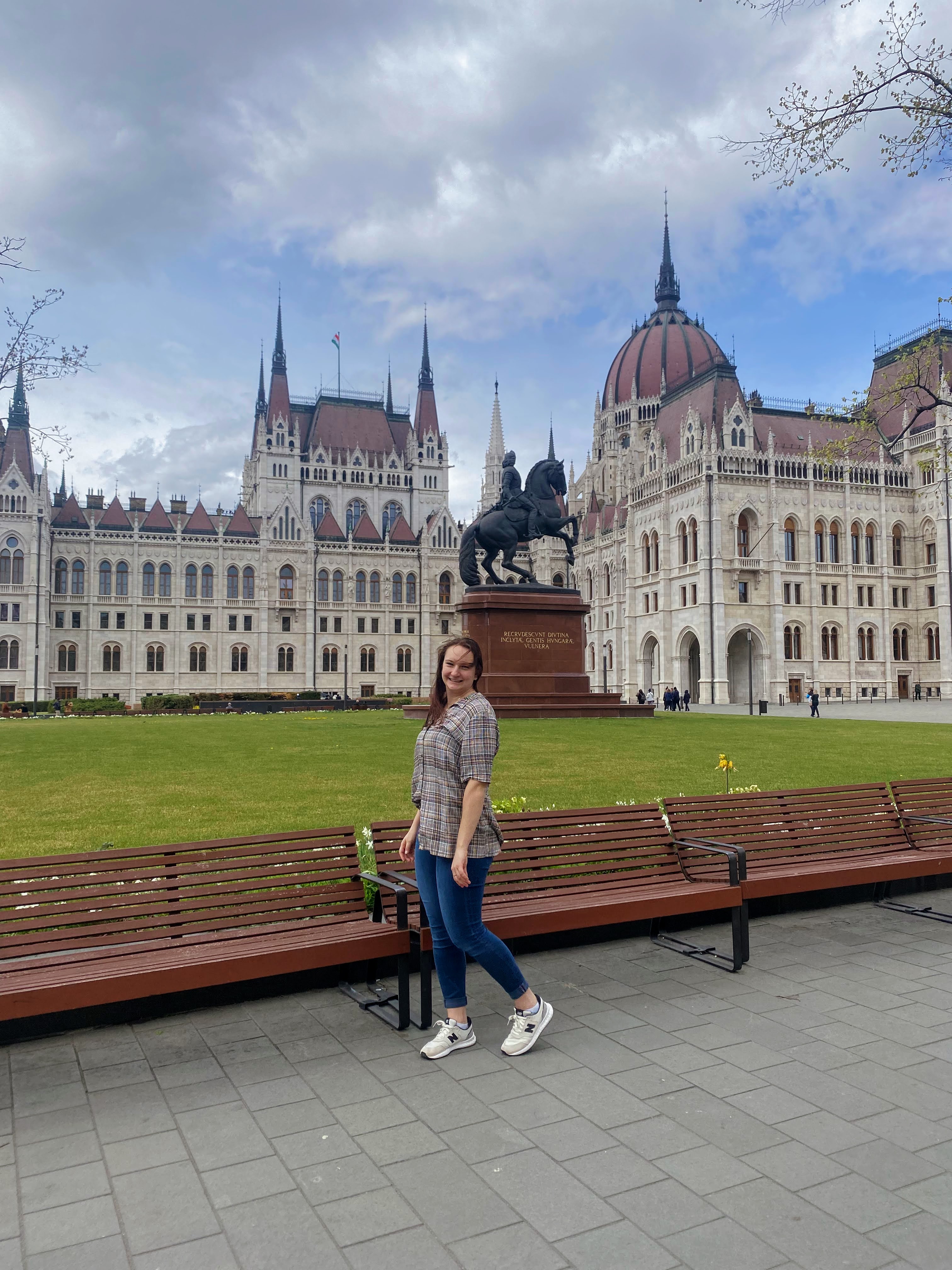
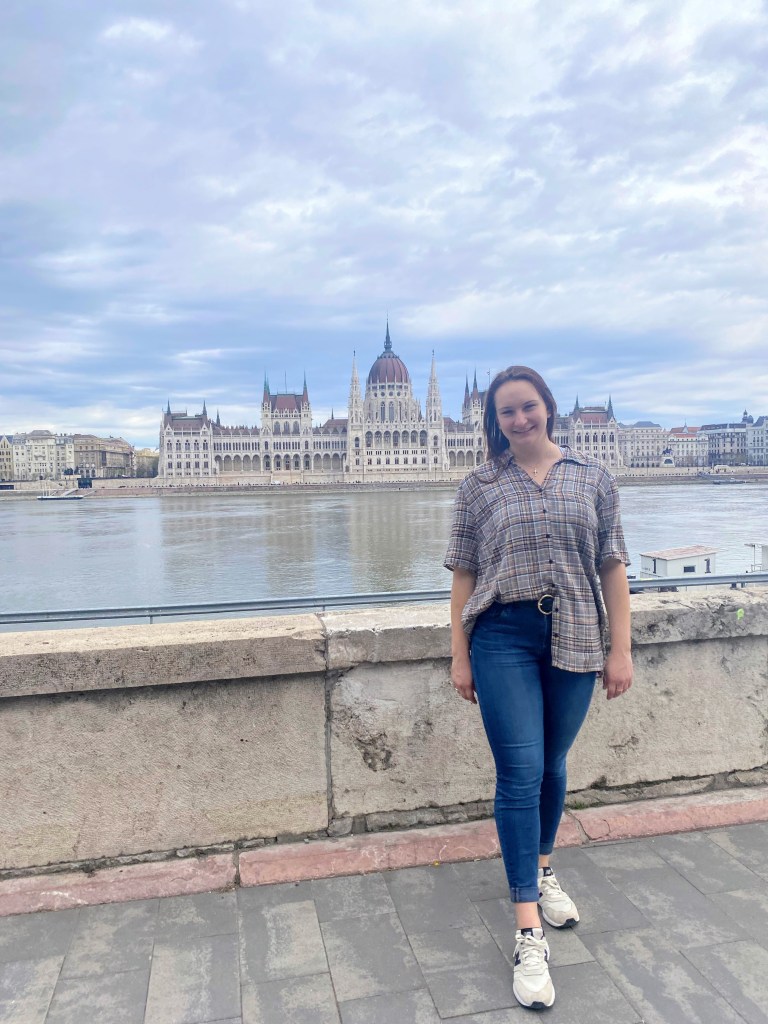
We continued our walk around the famous Parliament and stopped by the Shoes on the Danube Bank. This memorial honors the Jews massacred by the Fascist Arrow Cross Party during the Second World War. They were ordered to remove their shoes before being shot at the water’s edge so their bodies would be carried away. It was a somber memorial, and the other tourists also kept a respectful atmosphere.
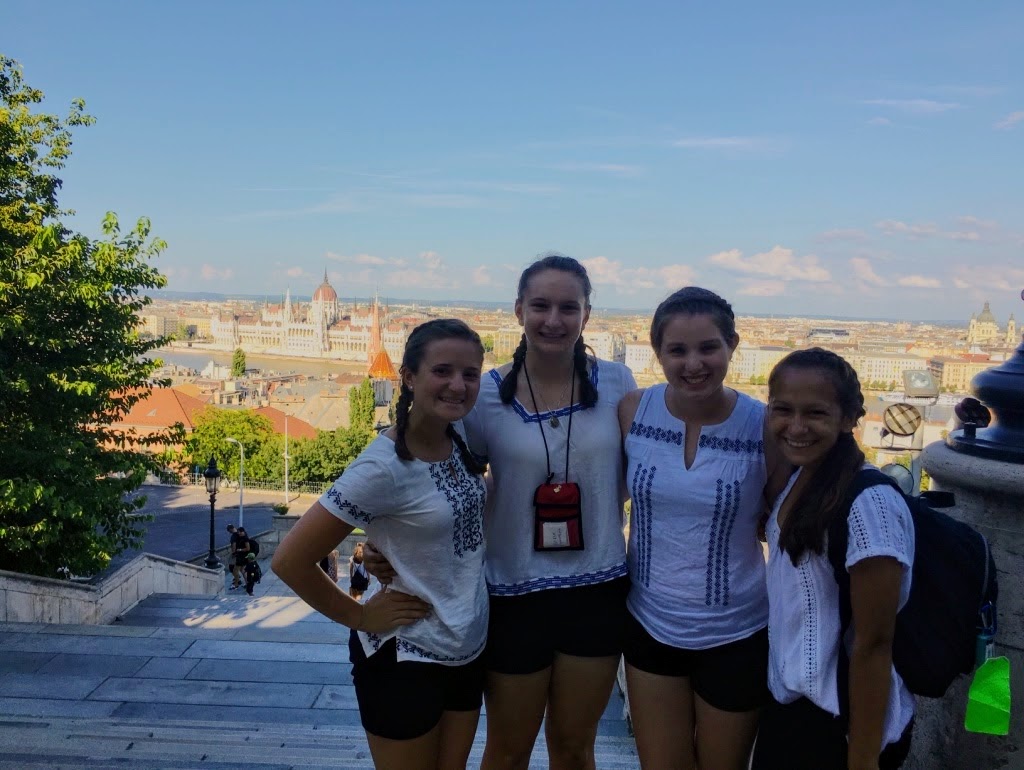
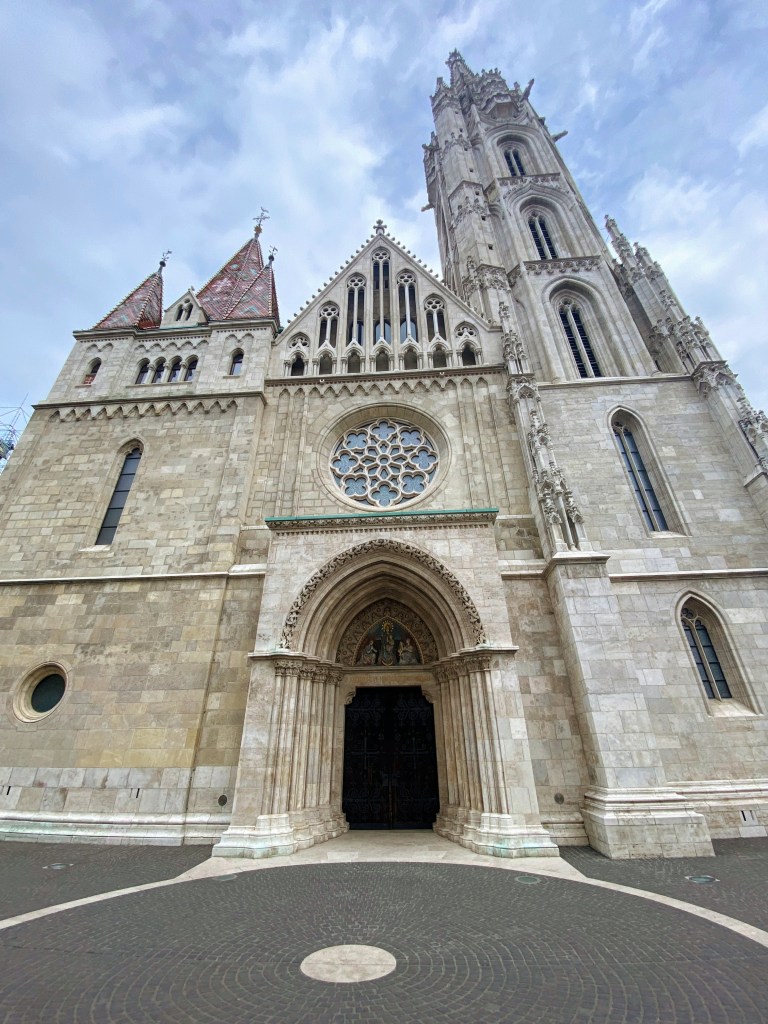
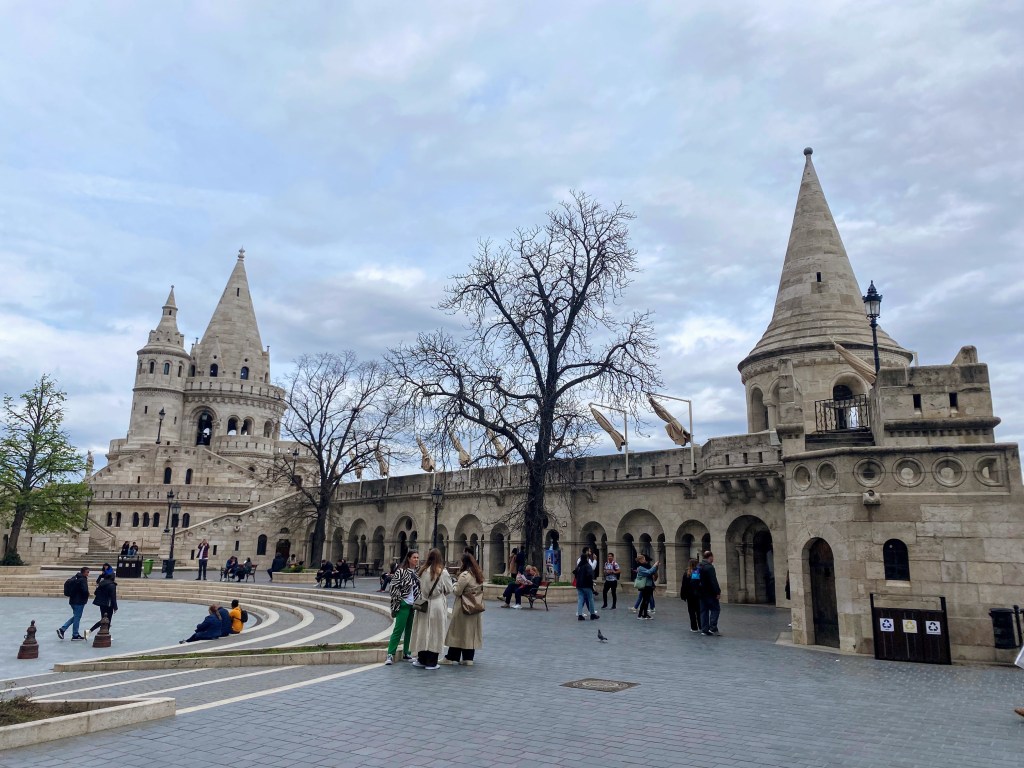
We crossed the river, hiked up to the Fisherman’s Bastion, and saw Matthias Church from the outside. Fisherman’s Bastion was built as a lookout point for the city where the remains of castle walls once stood. This place does not have a rich history as I expected, and most people visit to take fun photos and admire the view for a few minutes. I was not as excited about Fisherman’s Bastion as I was in 2016 when I visited Budapest on a high school trip to World Youth Day. (I added a photo from this trip to the slideshow below. I also went to Prague on this same trip- it’s cool to recognize the once foreign places I photographed six years ago as familiar.)

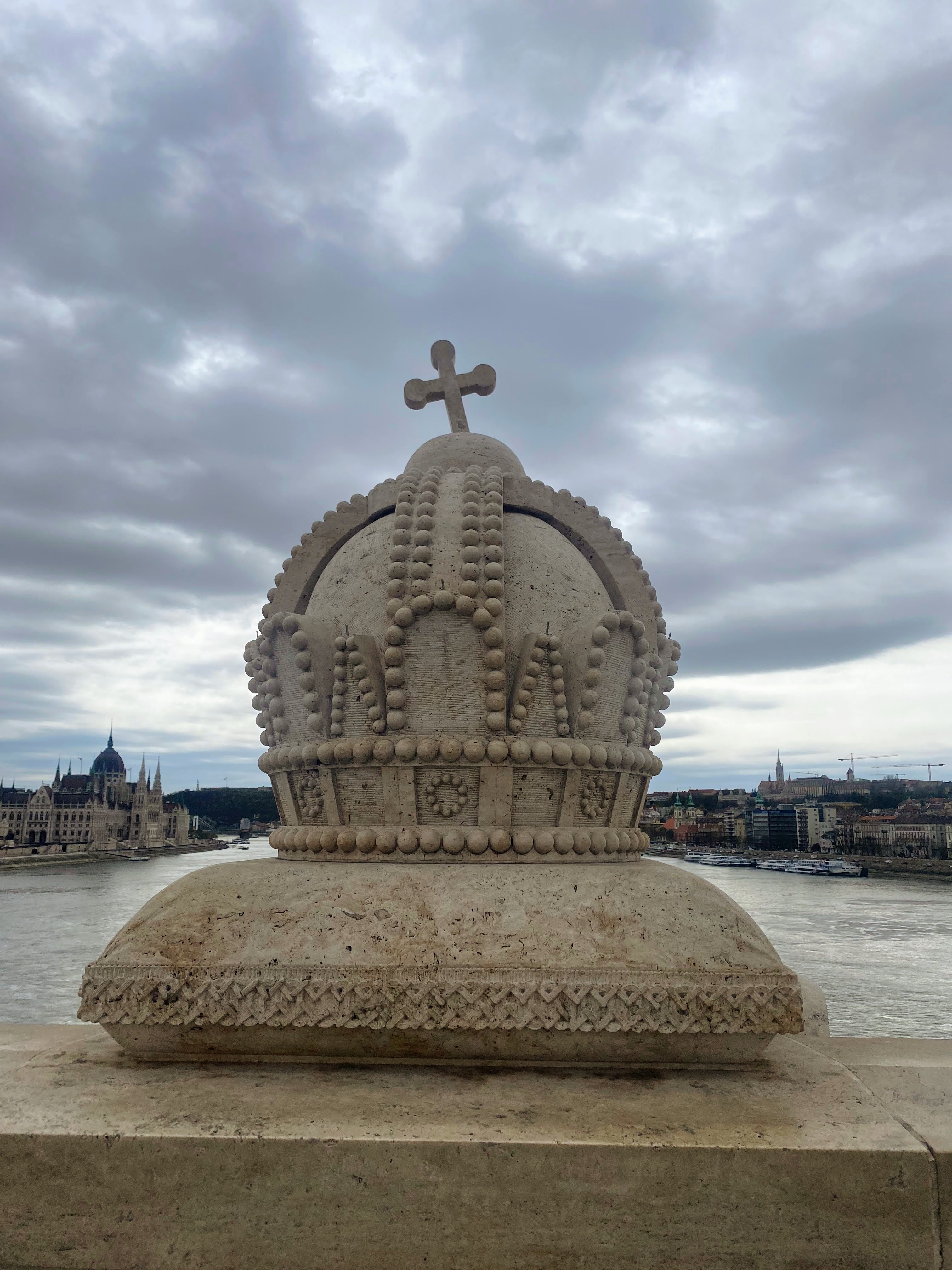
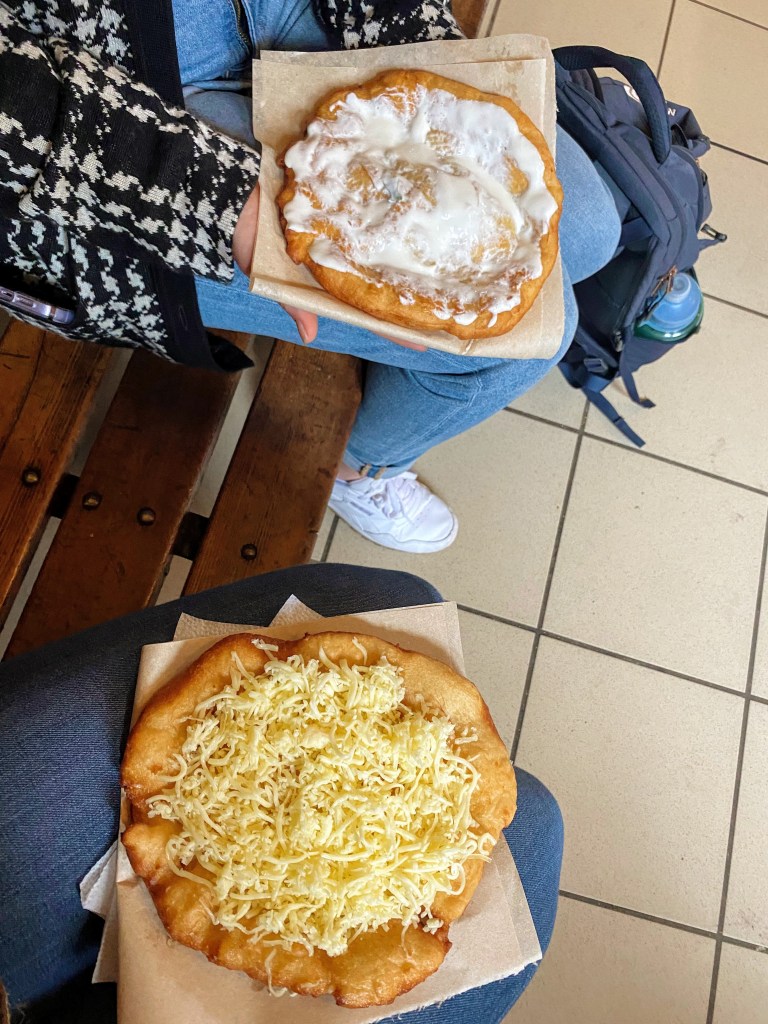
For lunch, we crossed the river back to the Pest side of Budapest and went to Central Market Hall. We tried lángos (“lan-gosh”)- deep-fried bread made with potatoes and topped with sour cream, cheese, or both. Rachel and I agreed that eating lángos was a highlight of our time in Budapest, and we had them again for dinner. We also tasted other traditional Hungarian food that is similar to Czech food, such as beef goulash and cinnamon spit cake, kürtőskalács (I have no idea how to pronounce this word). Hungarians make tastier goulash, but the Czechs win with the cinnamon spit cake (“trdelník” in Czech).
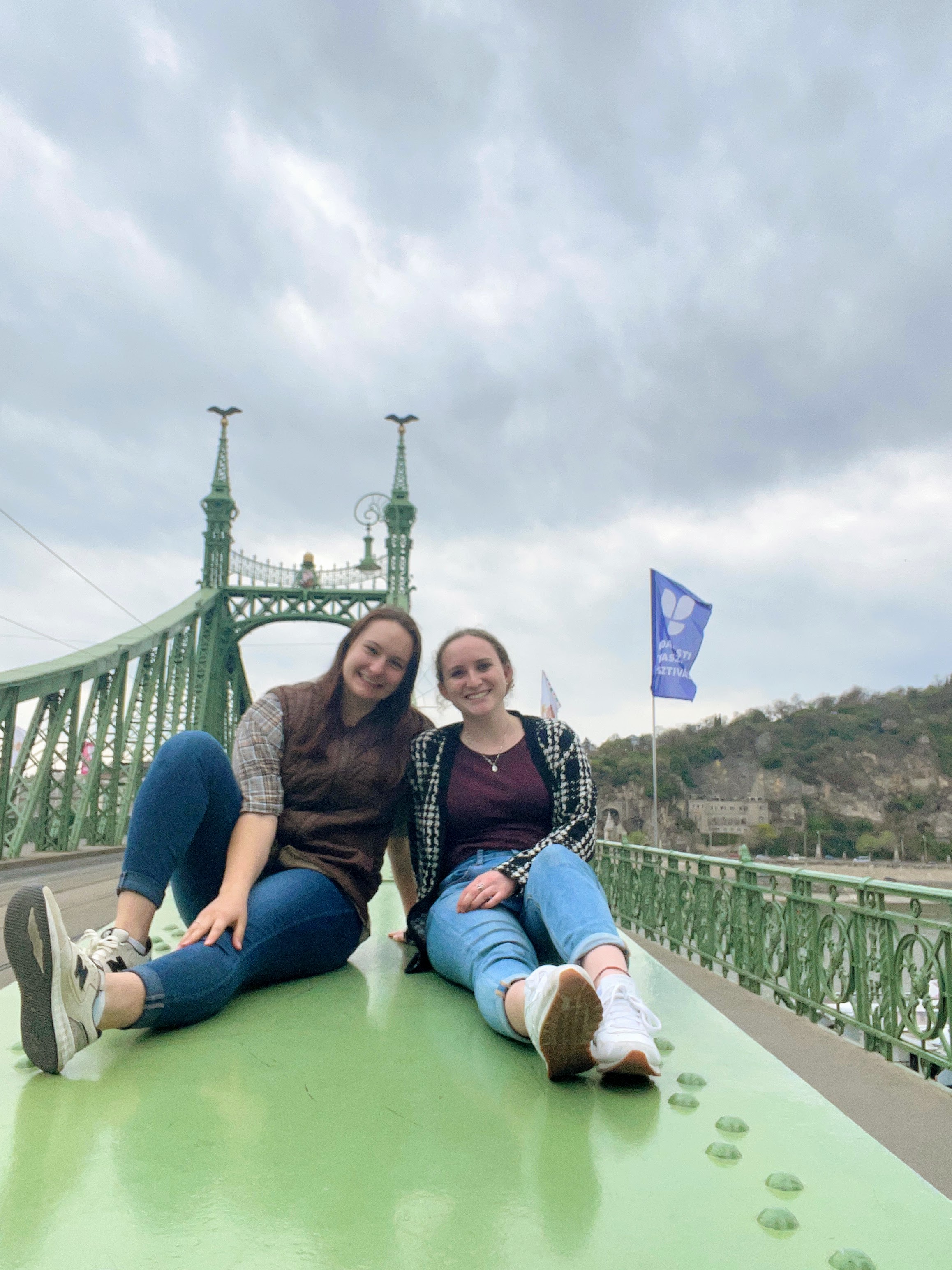
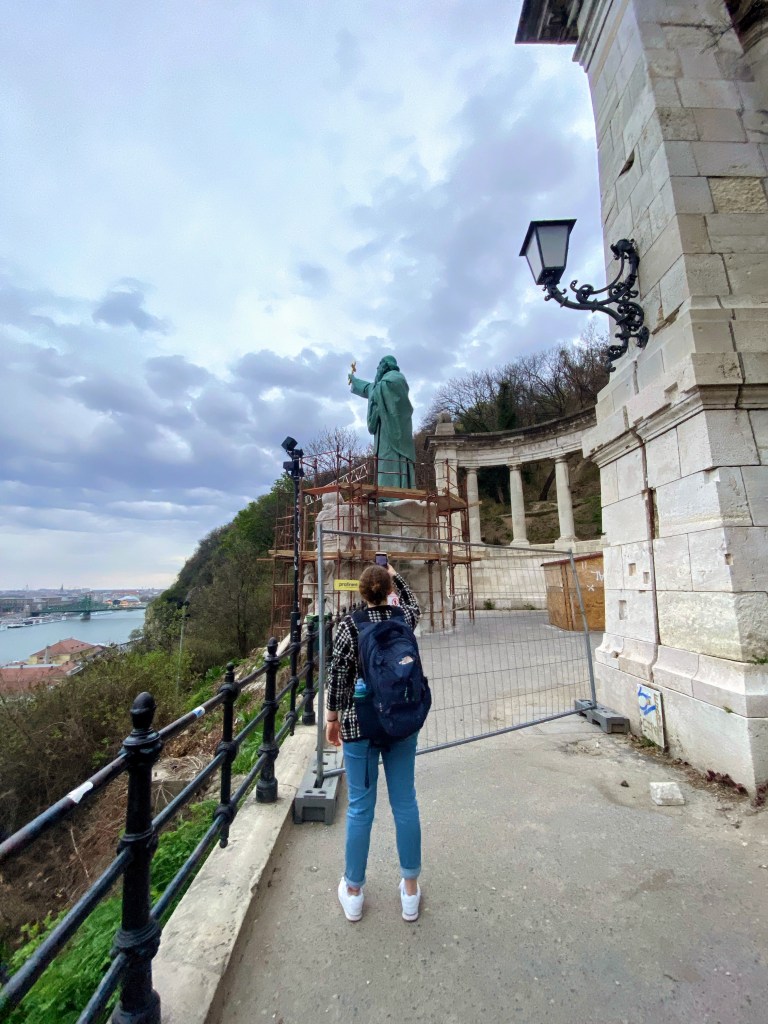
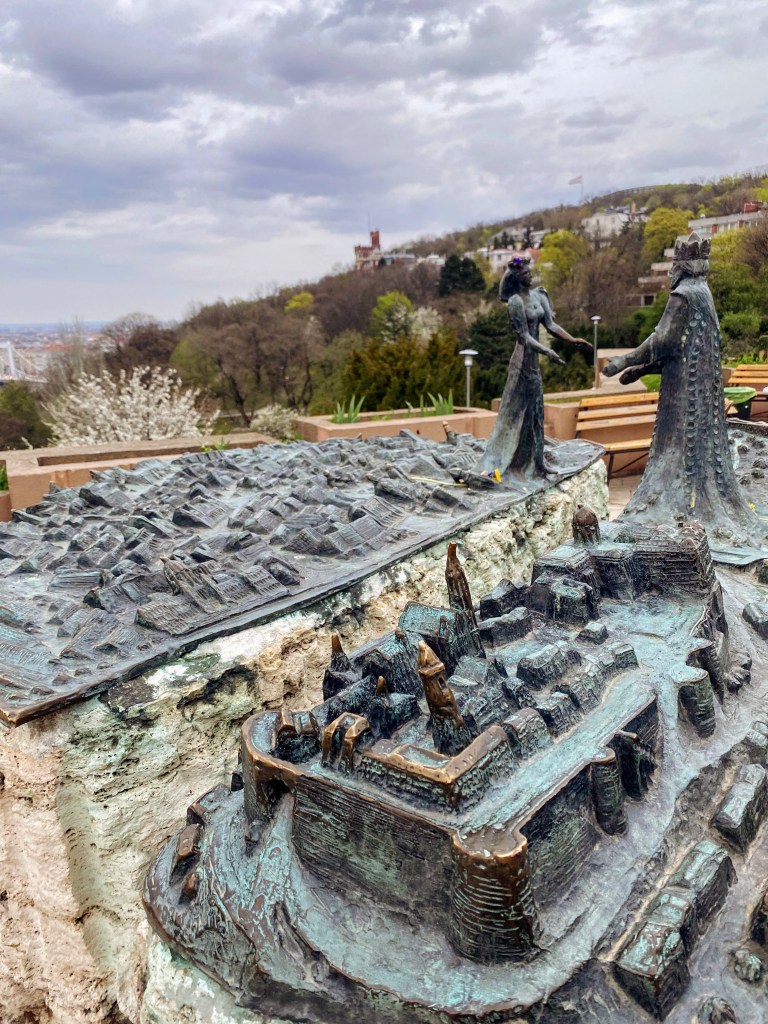
We spent the rest of the day hiking Gellert Hill, riding the Ferris wheel at night, and going out for drinks at the For Sale pub. Here, visitors can leave their mark on any available surface. I’m curious how this place passed fire safety regulations because it would take just one match to ruin this place.
Speaking of ruined places, we had a blast at Szimpla Kert, the oldest Ruin Bar in Budapest, the following afternoon. Ruin Bars are found in rundown buildings decorated with random furniture and artwork. We visited during the day when artistic vendors come to sell everything from handmade jewelry, fanny packs made from recycled bags, and vintage clothes.
On Saturday, we visited the House of Terror, a museum with memorabilia from the fascist and communist reigns in the 1900s. The basement of the building is a labyrinth of cells in which people were once detained, interrogated, and killed. Going to museums like this reminds me that World War II is not as far in the past as I imagine. One new thing I learned was the German propaganda about the US military dropping invasive Colorado Potato Beetles on German crops. I’m sure we would have learned more had we rented audio guides, as there were few exhibitions with descriptions.
That evening, we took an overnight train to Prague. While I went to class, Rachel continued to enjoy her break from school and explored the city. The following weekend, we spent the Triduum in Vienna! Blog post in progress…


 kira vesta