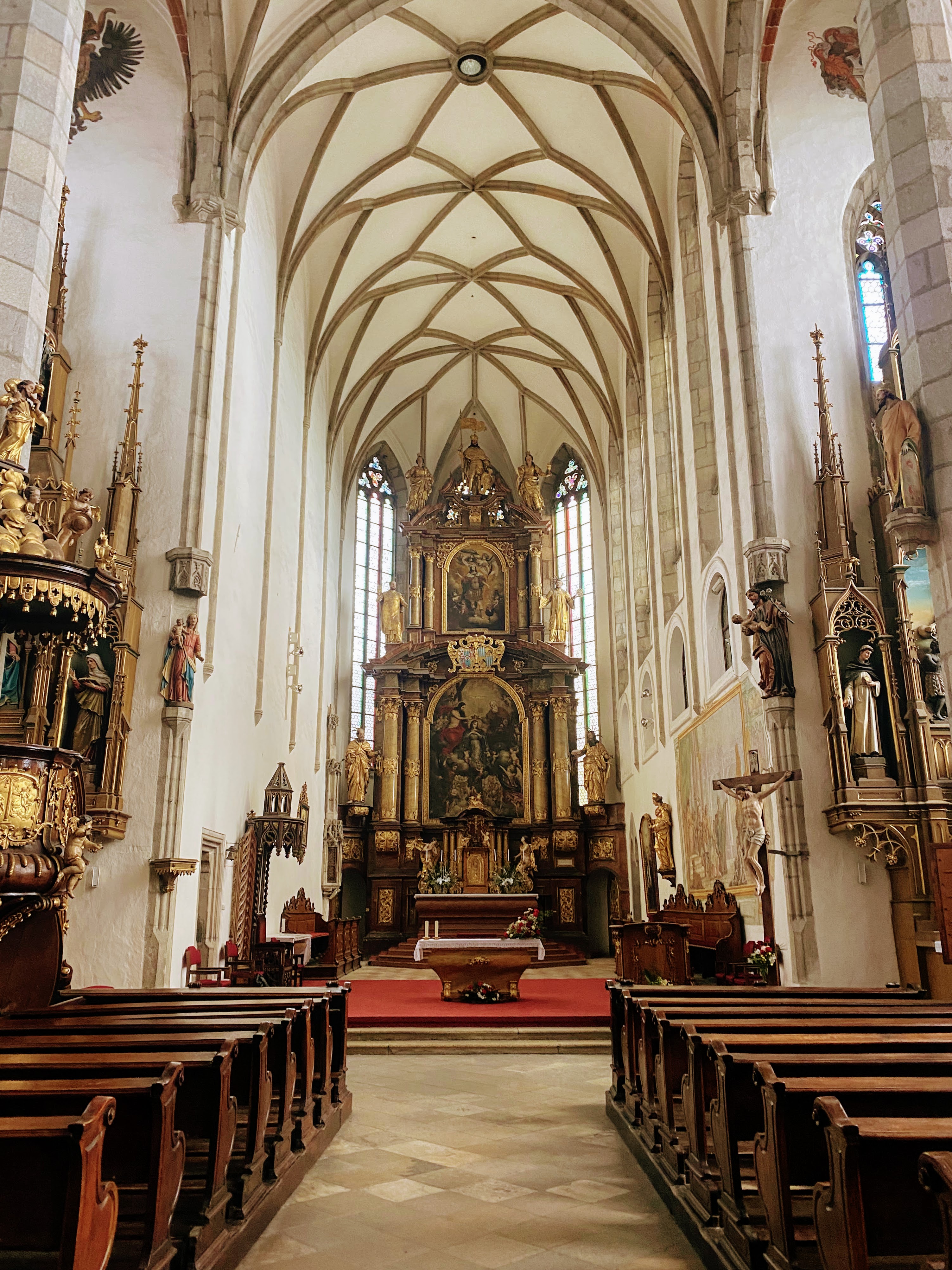
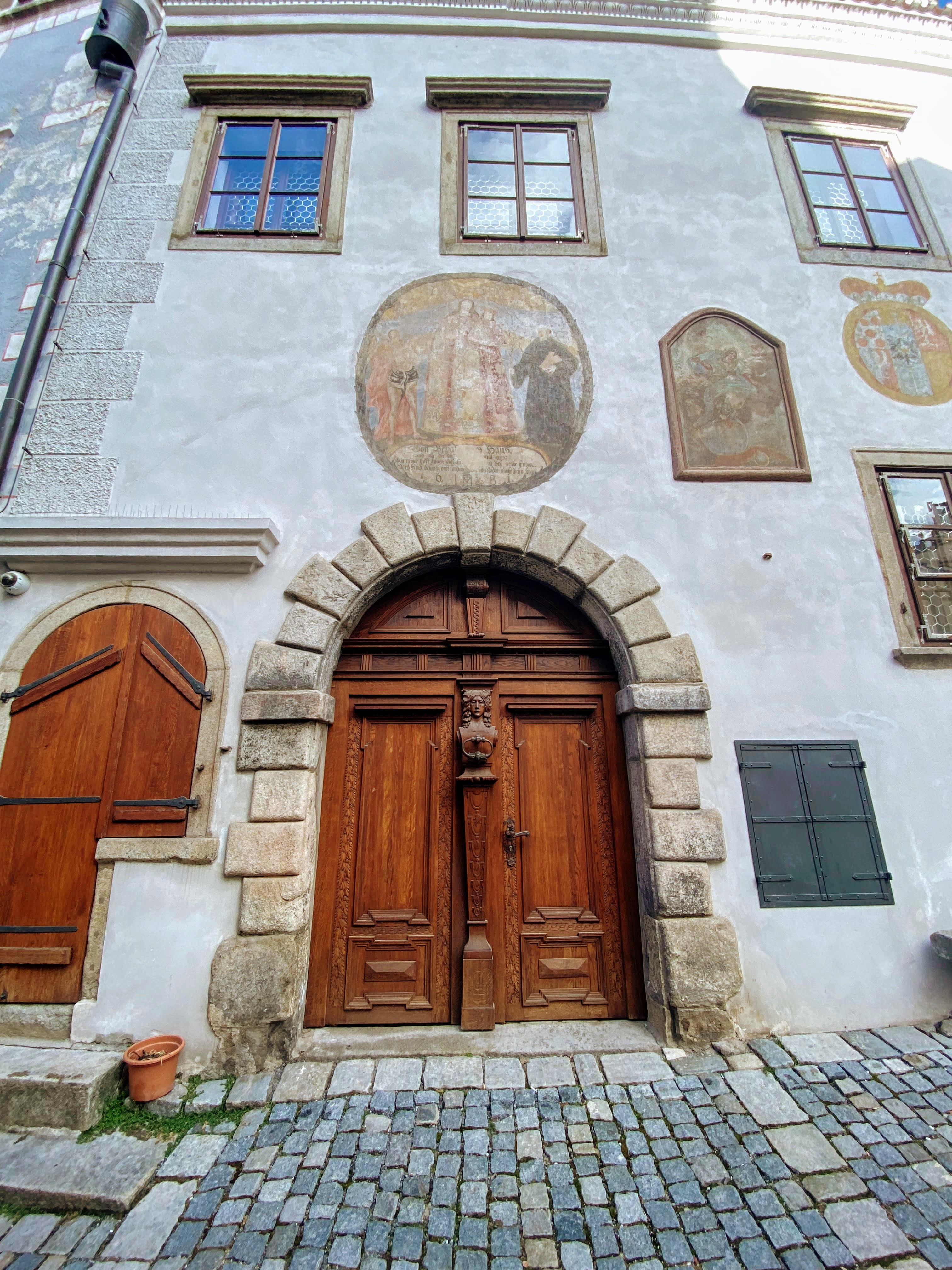
Prague has quickly become one of my favorite cities. There is intricate and historical architecture on every street and the people readily speak English and welcome visitors. Although the majority of the Czech Republic is atheist, there are Catholic churches every couple of blocks and remains of old religious artwork on some buildings. I love spotting these occasional artworks and quietly praising God.
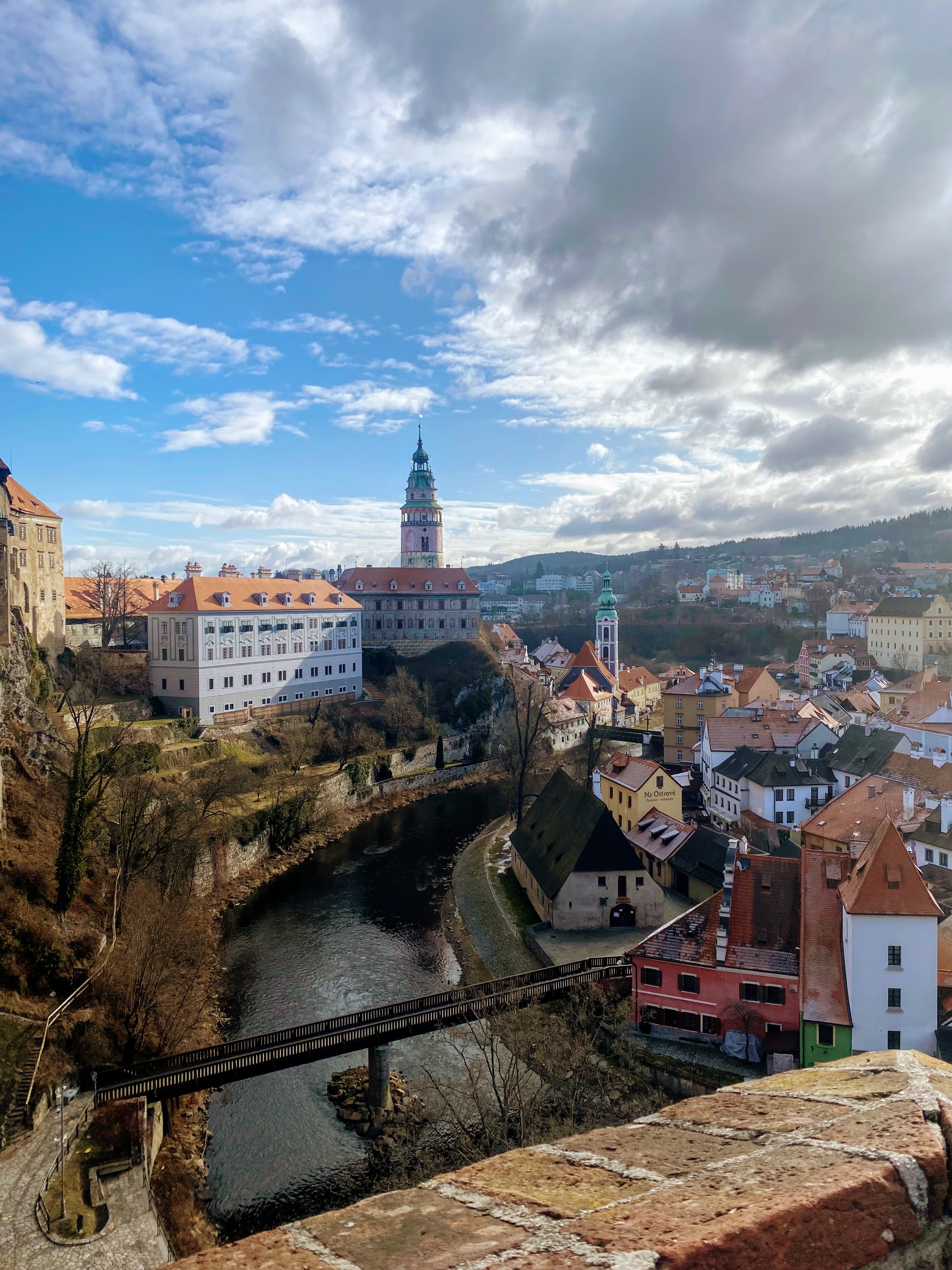
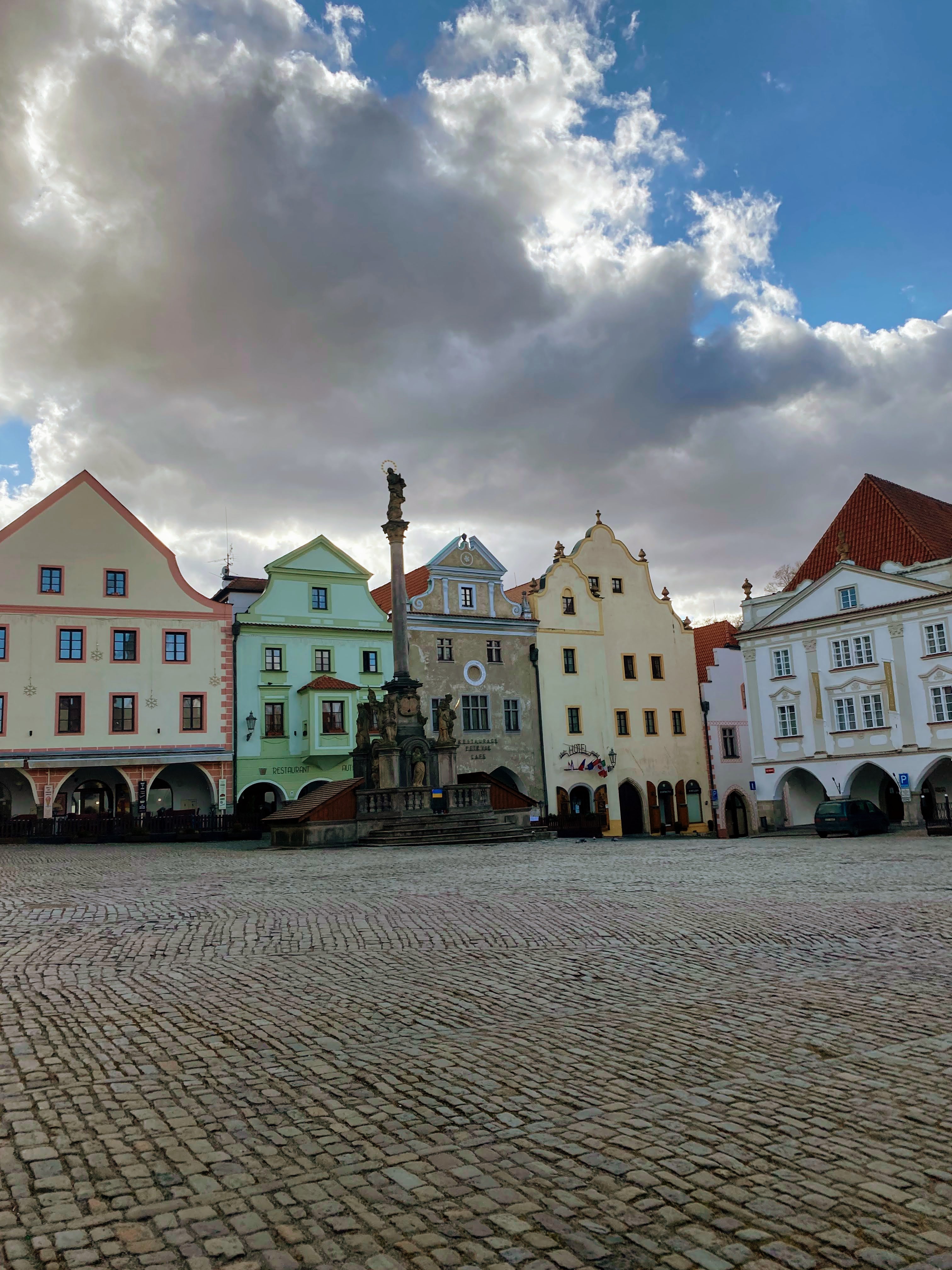
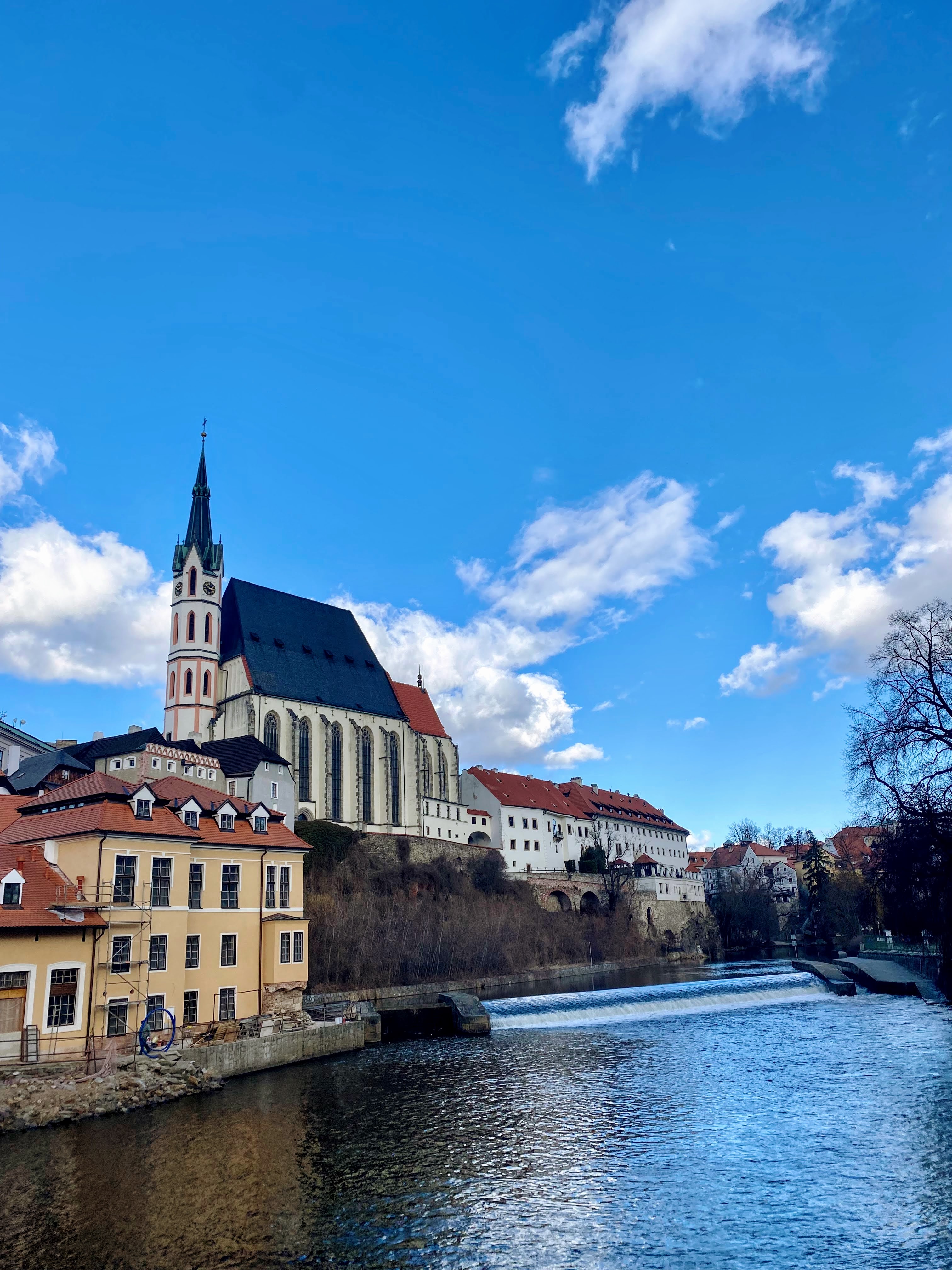
As much as I love Prague, I wanted to spend some time away from the loud and busy city. On Friday, I took a three-hour bus with my roommate, Anja, and my friend, Bela, to Český Krumlov. My uncle visited this town 20 years ago on his backpack tour of Europe and encouraged me to visit. Český Krumlov is known for the Krumlov Castle situated on the Vltava River. Tourists float down the river and pull their kayak over for a quick drink in town and tour the medieval castle. Unfortunately, touring the castle and floating the river were not options in February during the off-season. Still, we had a relaxing and adventurous time in this town and maybe we will revisit in May to float the river…
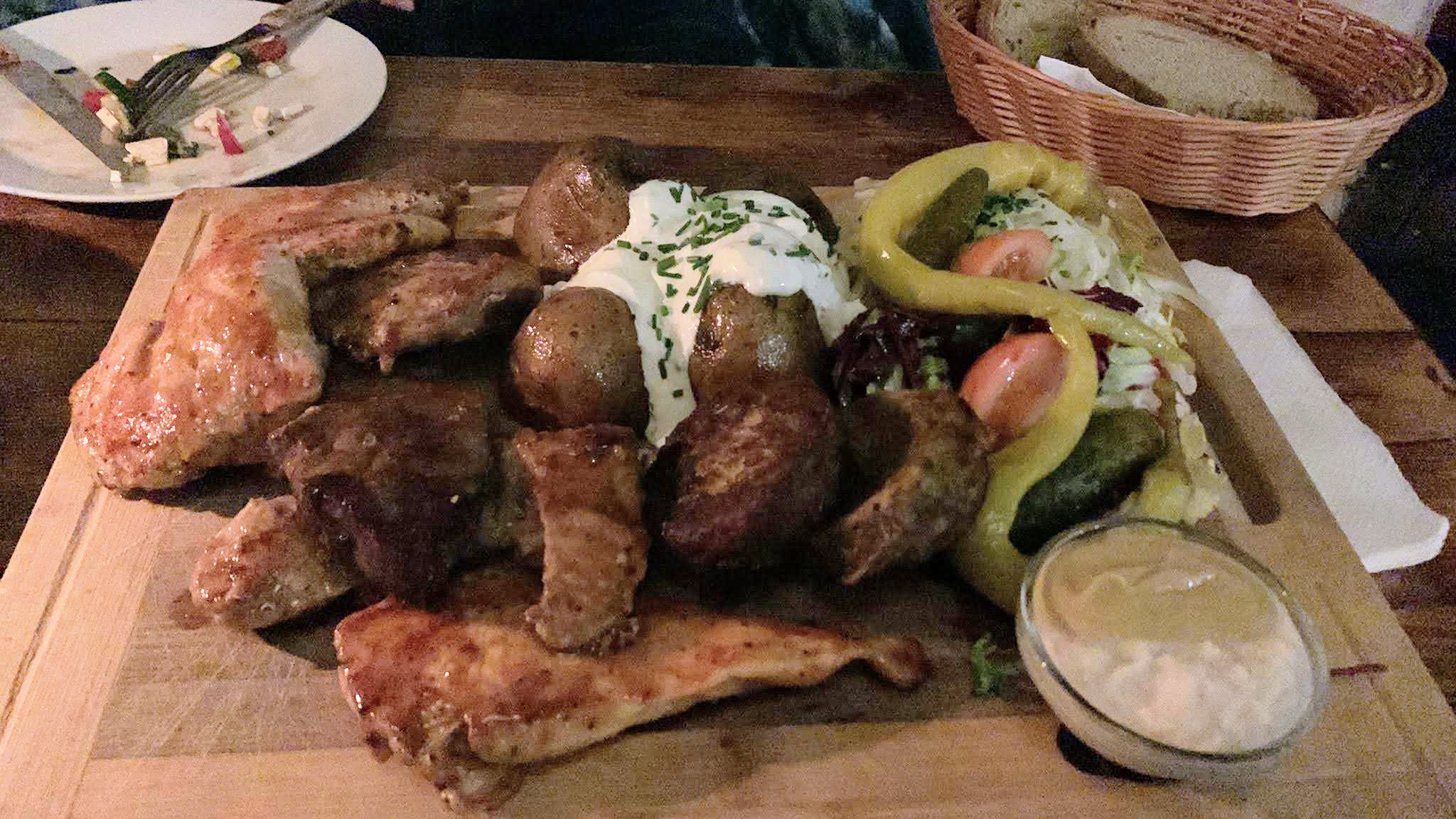
Bela and I arrived Friday afternoon, and Anja joined us later that evening. We strolled around town and randomly chose Krčma Šatlava for lunch. Krčma Šatlava is a reconstructed medieval tavern in the town center. They served traditional Czech food (mainly meat, potatoes, and beer) with an open fire in the center of the low-ceiling building. Bela and I split a meat plate that had one of the best chicken I’ve ever eaten (sorry Dad).
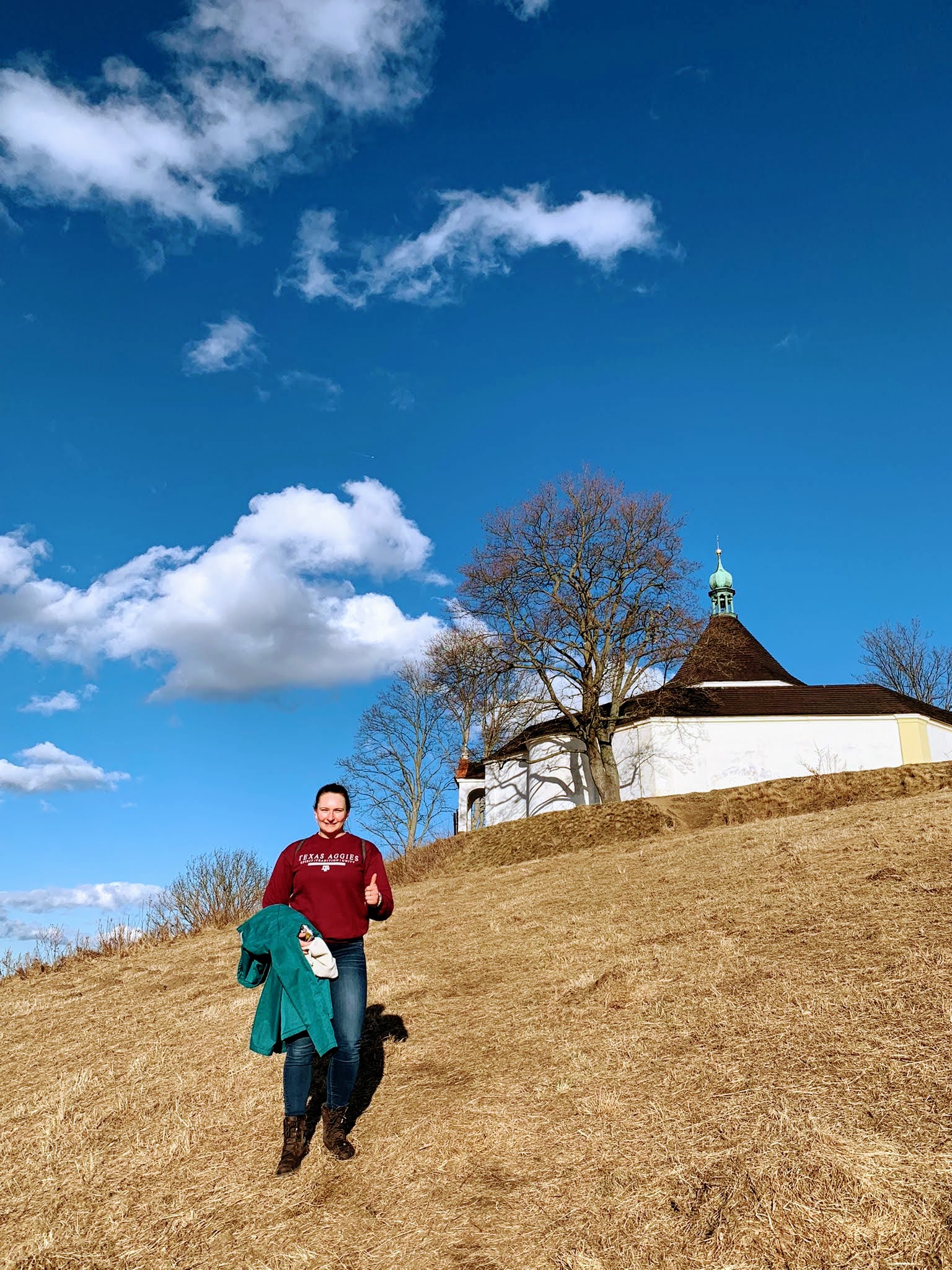
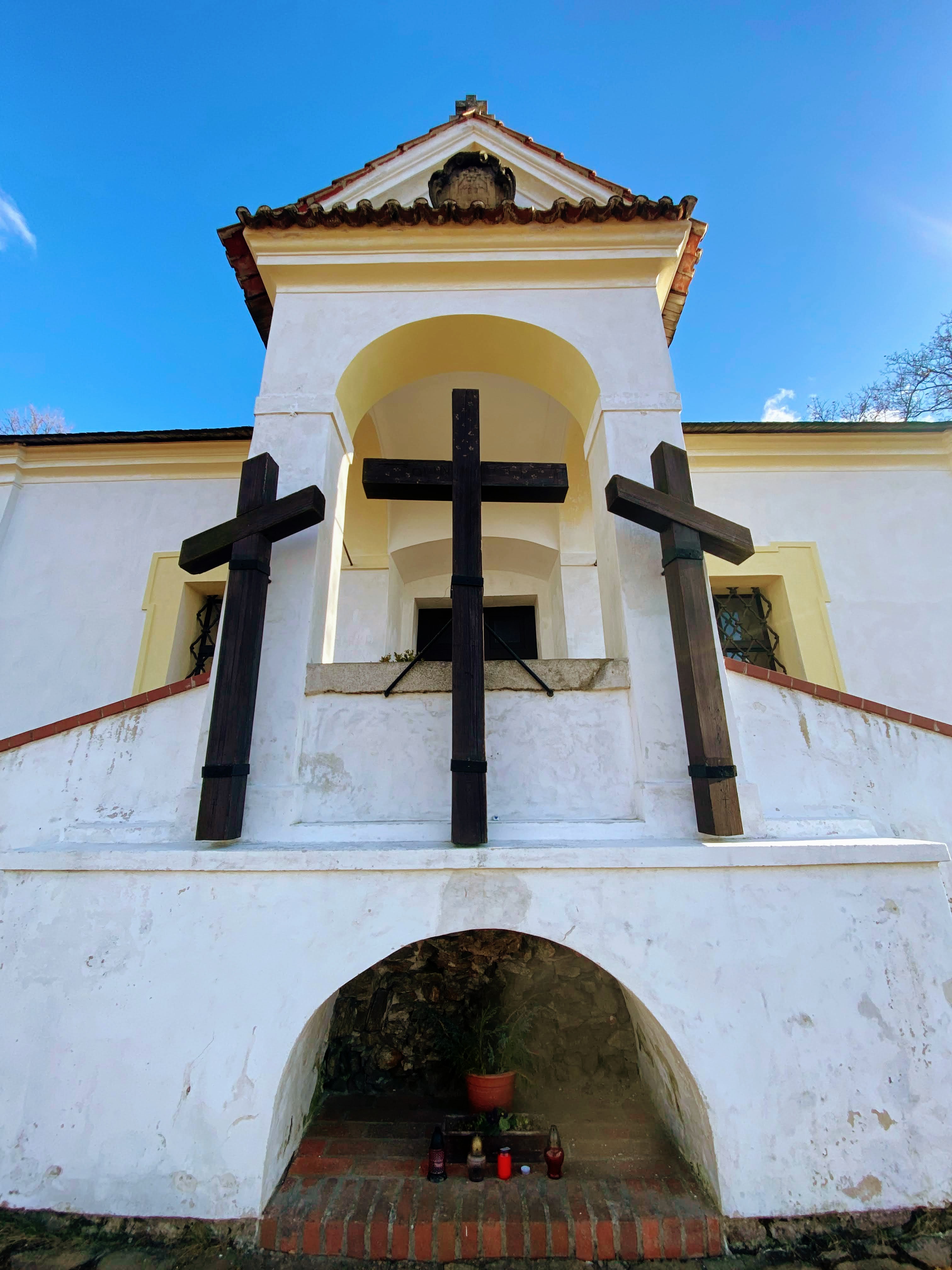
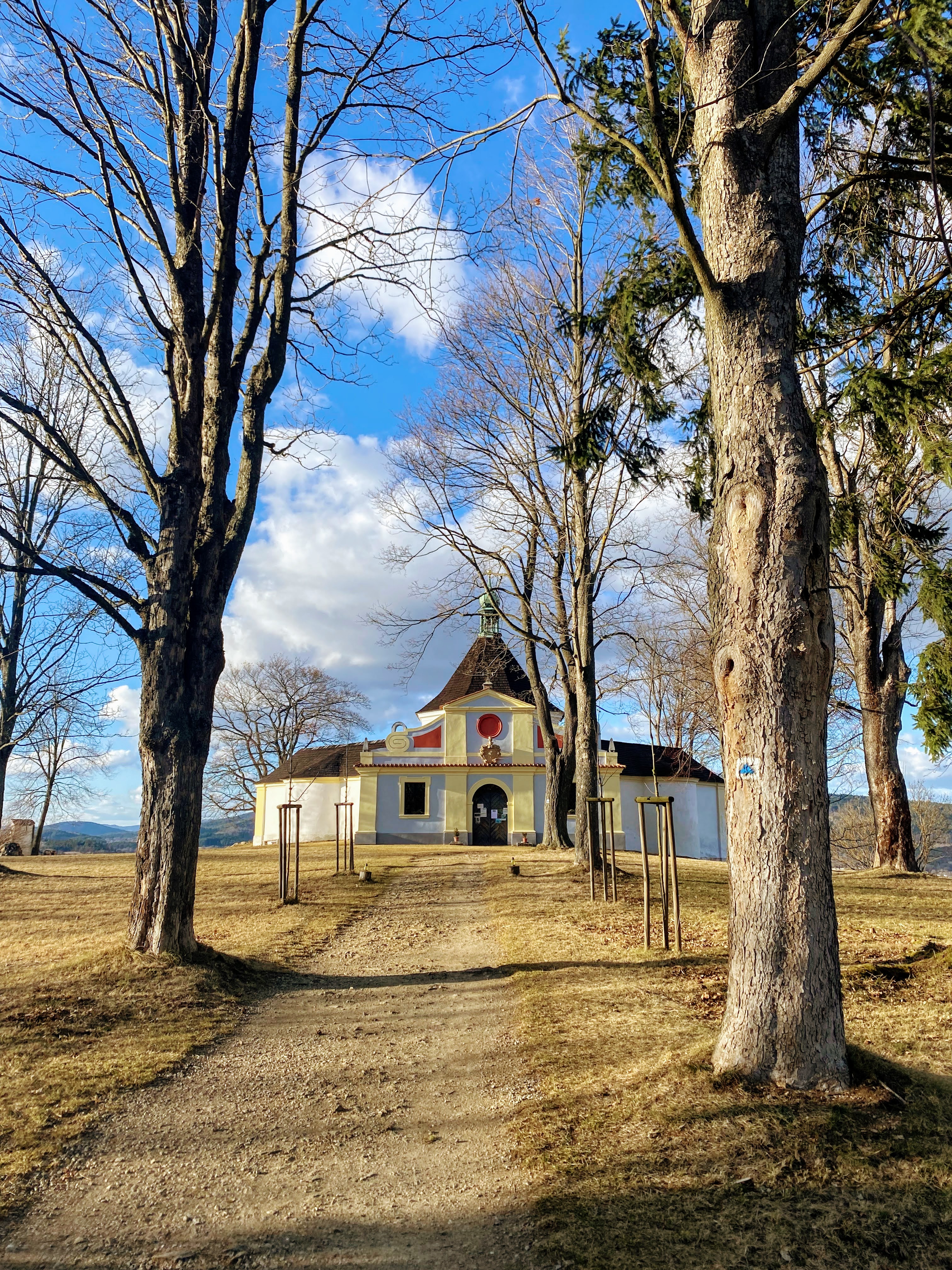
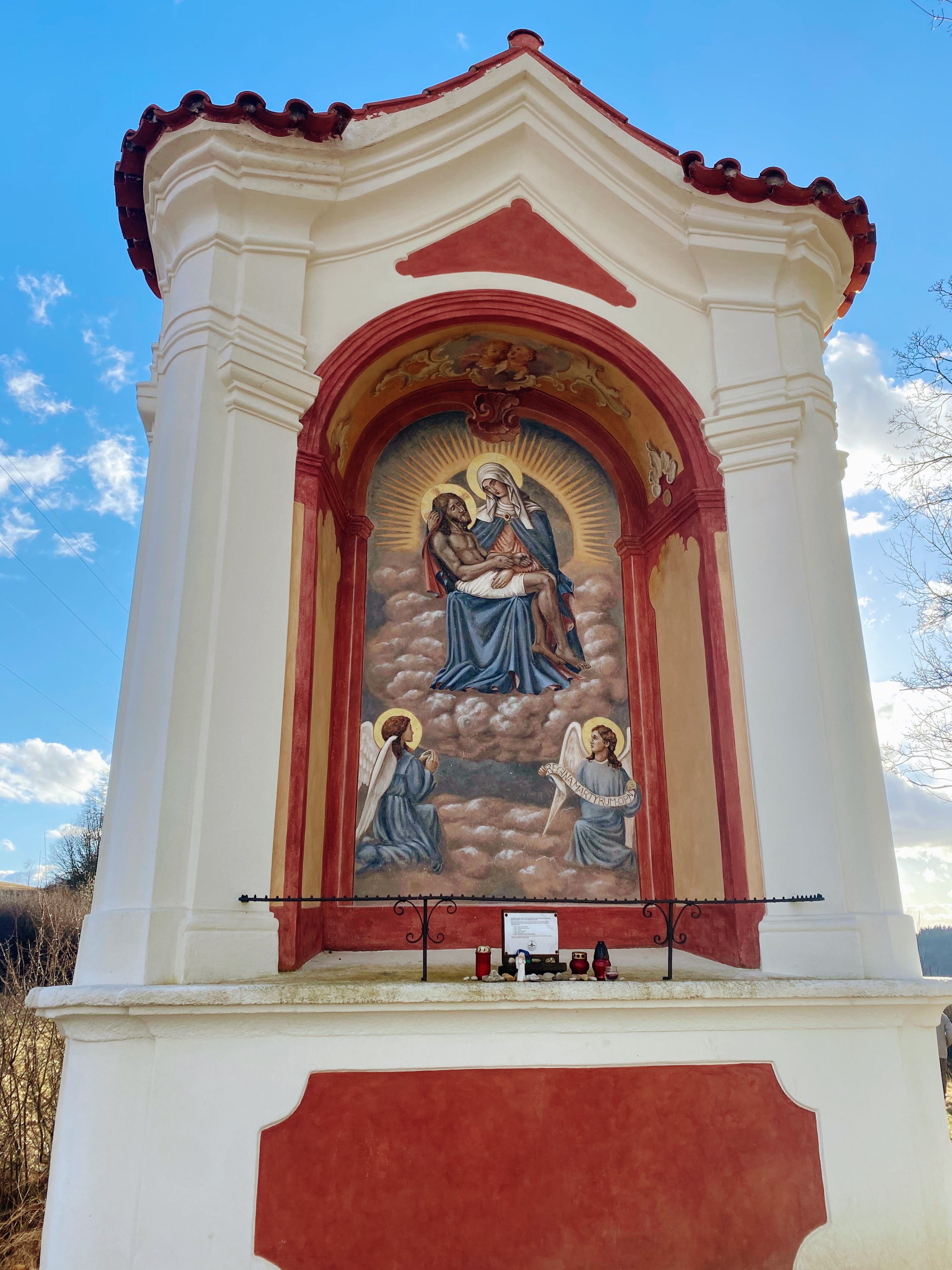
After lunch, we checked into our hostel (the same place my uncle stayed in) and hiked up to Křížová hora. At the top of this hill was the Chapel of Our Lady of Sorrows and St. Crosses that had the Stations of the Cross inside. The chapel is only opened on the weekends, but we were still rewarded after the steep 25-minute hike with a beautiful view of the town.
We met up with Anja at a cafe and I taught my friends an easy card game I learned from my family called Blitz (I hope Grandma Vesta was watching 🙂 ) I notice there are a couple things European coffee shops do differently. Firstly, most places serve coffee in the morning and alcohol in the afternoon. It is also common to see people enjoying lunch at 11am, with one person drinking a cappuccino and the other drinking a beer or grog (warm rum with honey or sugar). The coffee shop market reflects the younger legal drinking age and embraces the drinking culture of central Europe. Secondly, every dog owner brings their dog with them inside the coffee shop. Servers step over giant dogs chilling on the ground without hesitation. In fact, Czechia ranked third in the EU for dog ownership per household. I’m liking this country more and more…
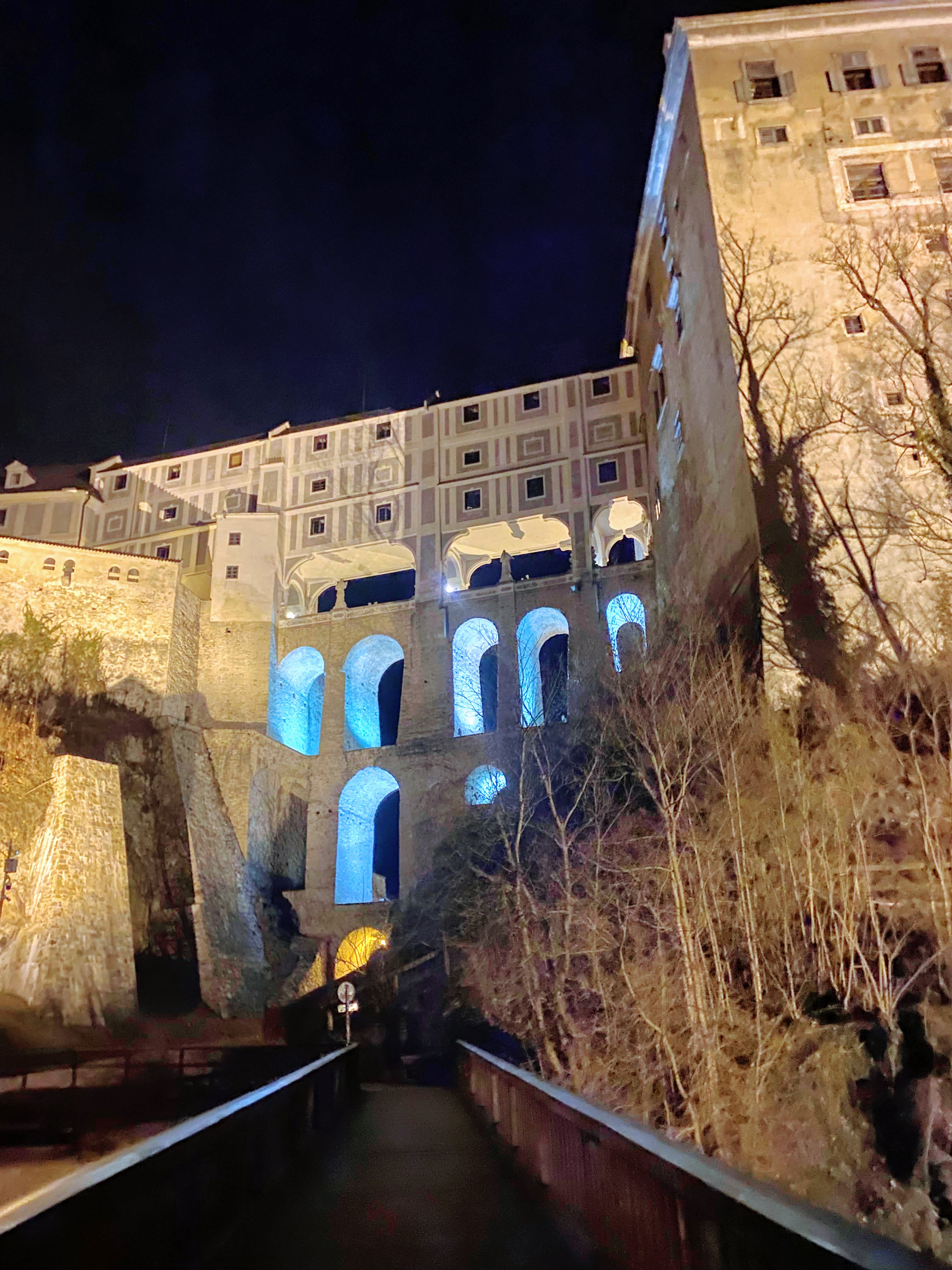
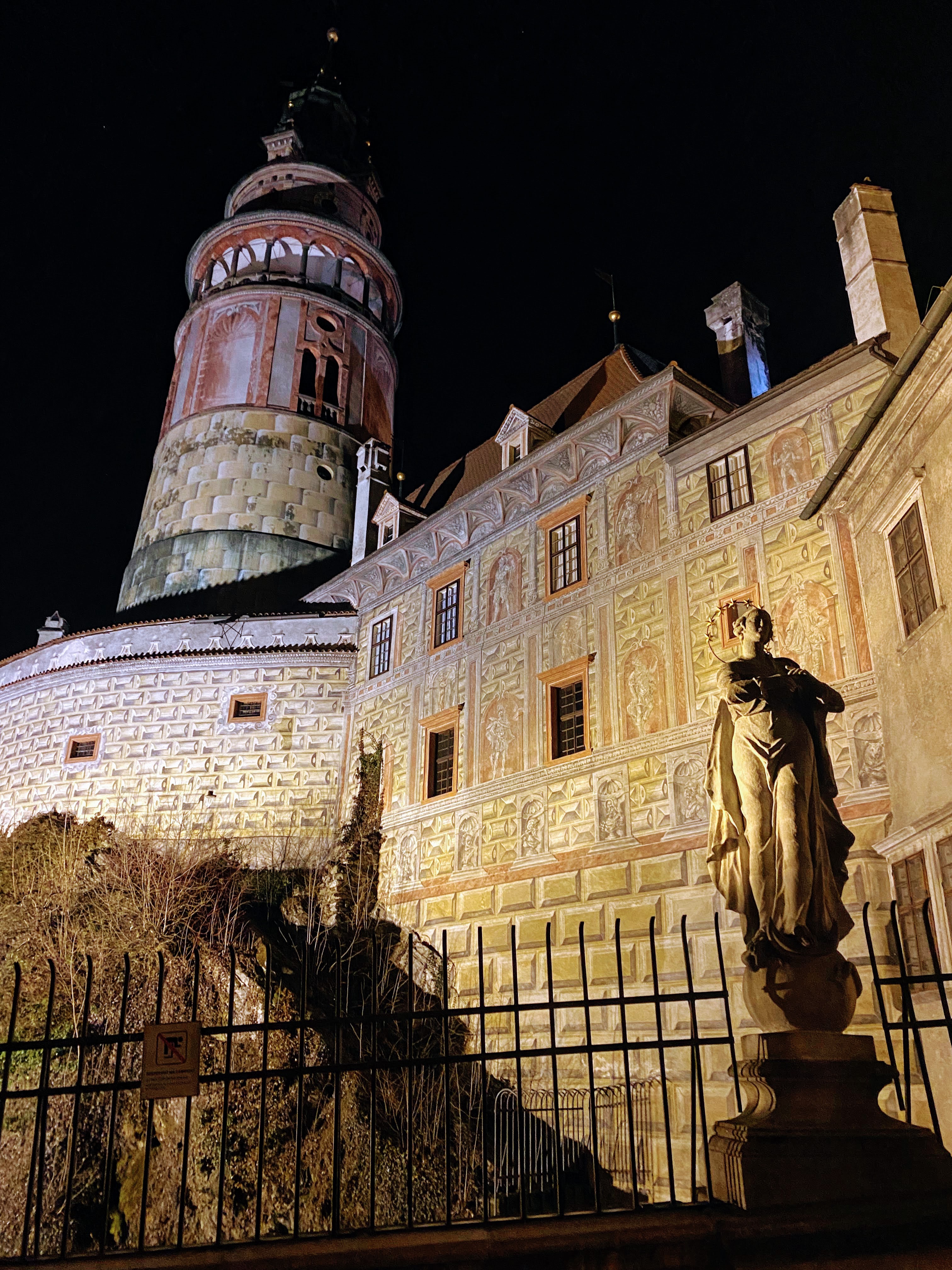
After our coffee break (actually, it was more of a mulled-wine-and-grog break), we explored the castle grounds that are open to the public. (I also spotted another unique manhole that I added to my gallery.) The well-preserved castle was beautiful, and we revisited it Saturday morning to see it in the daylight. There is a long list of royal inhabitants of the castle, beginning with the Lords of Krumlov in 1250. The Rosenbergs inherited the castle in 1302, followed by the Viennese Emperor Rudolf the II in 1602. After Emperor Rudolf, Eggenbergs lived there until the Schwarzenberg family inherited Krumlov castle and estates. The castle and estates became the property of the Czechoslovak state in 1947.
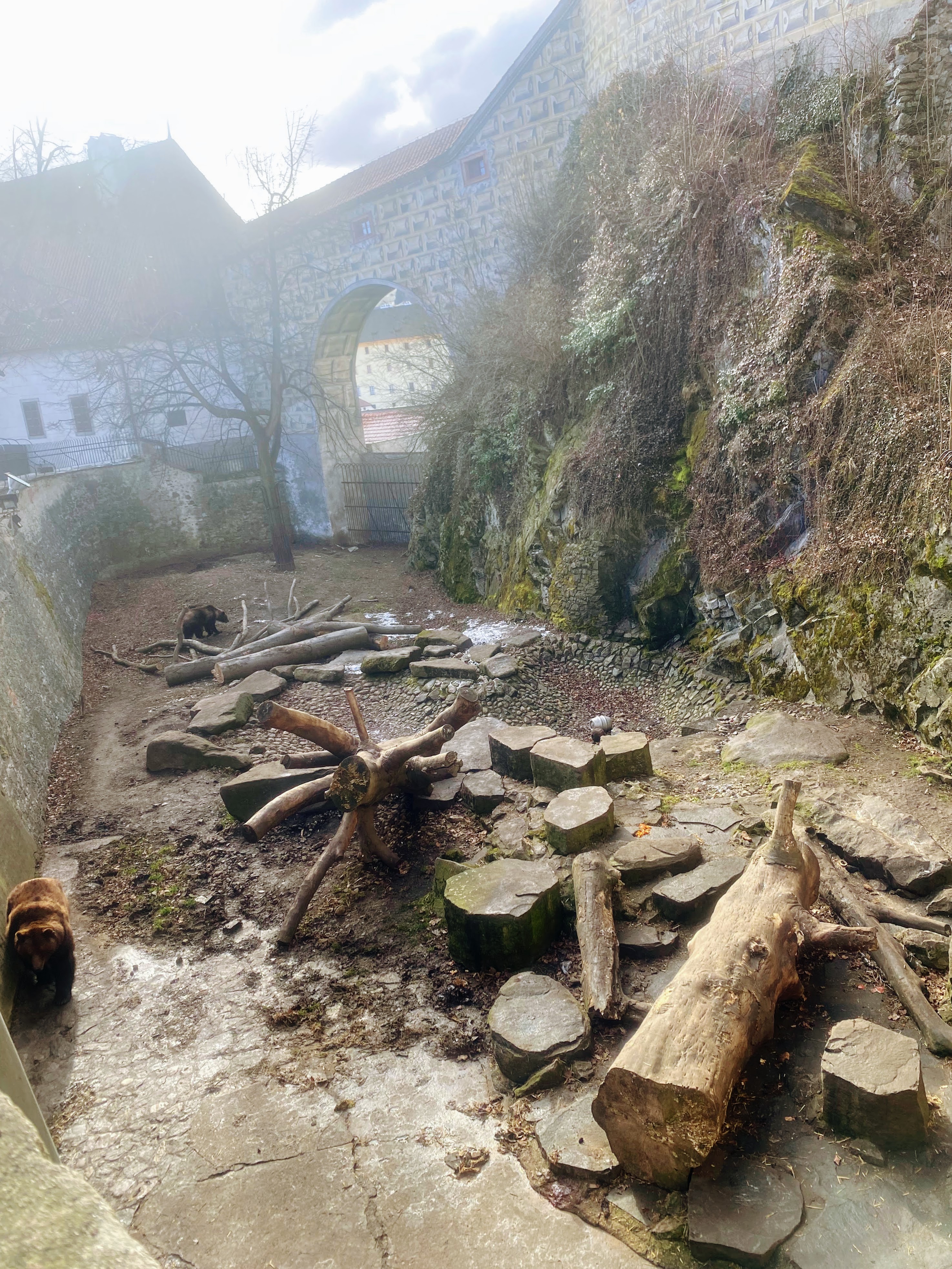
The Rosenberg family were the first inhabitants of Krumlov to keep bears in the moat around the estates. On and off throughout history, bears have been kept in the “bear moat,” just passed the famous Cloak Bridge. We saw the two older bears, Vok and Kateřina. These bears are celebrated by the community on Christmas and on their birthdays. I knew about the bears, but my friends were delightfully surprised. 🙂
We stopped for a quick breakfast before visiting the Český Krumlov Monasteries. The Minorite and Poor Clares Monastery was established by the Rosenberg family as a unique triple monastery. It is now an interactive museum with creative workshops to experience medieval monastery life. We learned about the food and drink storage, the art and science of alchemy, and the Danse Macabre of the medieval ages. We attempted to write in the typical renaissance calligraphy, created wax seals, and mixed our own smelling salts. I could have spent all day exploring and learning how these people lived.

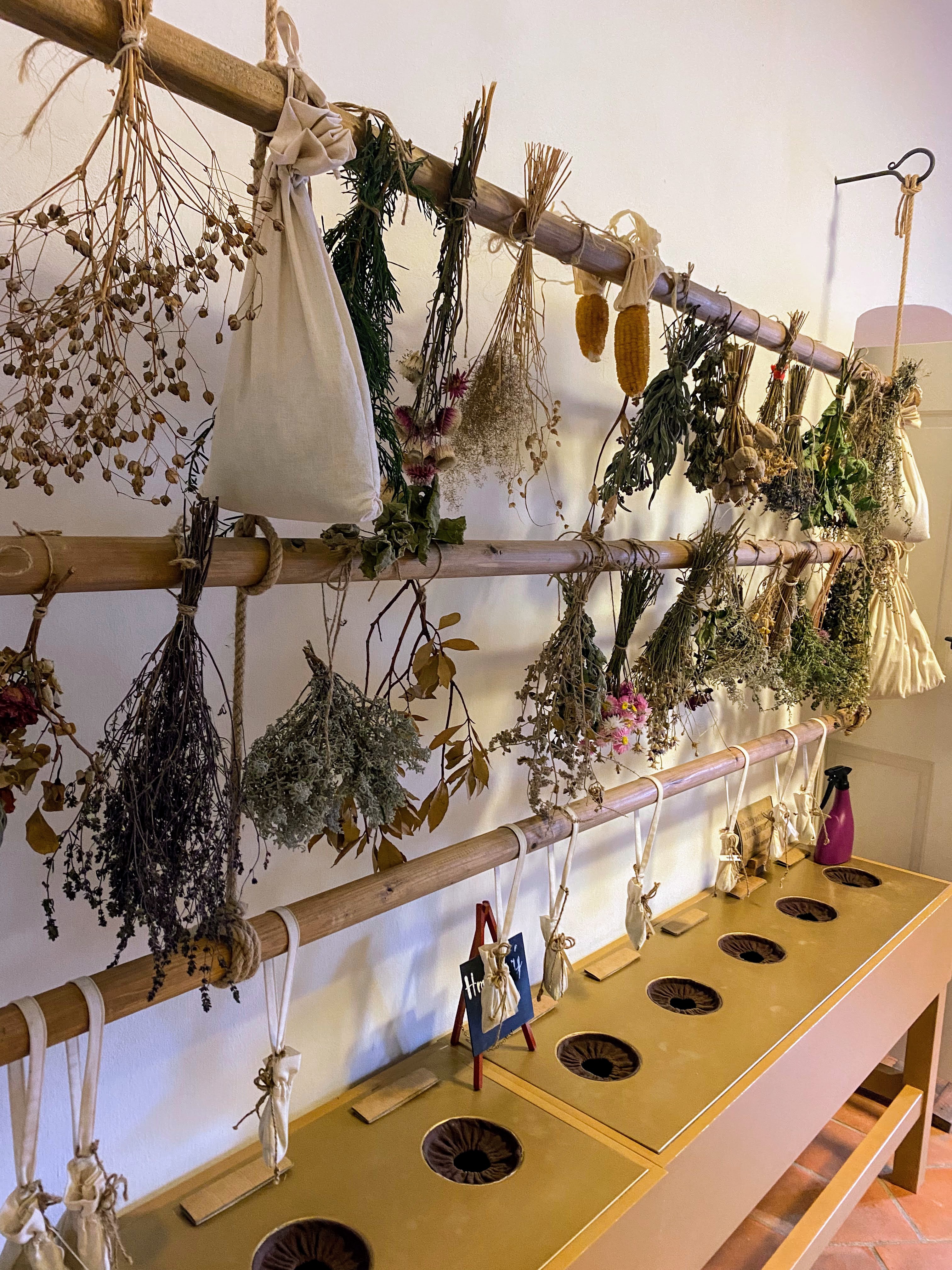
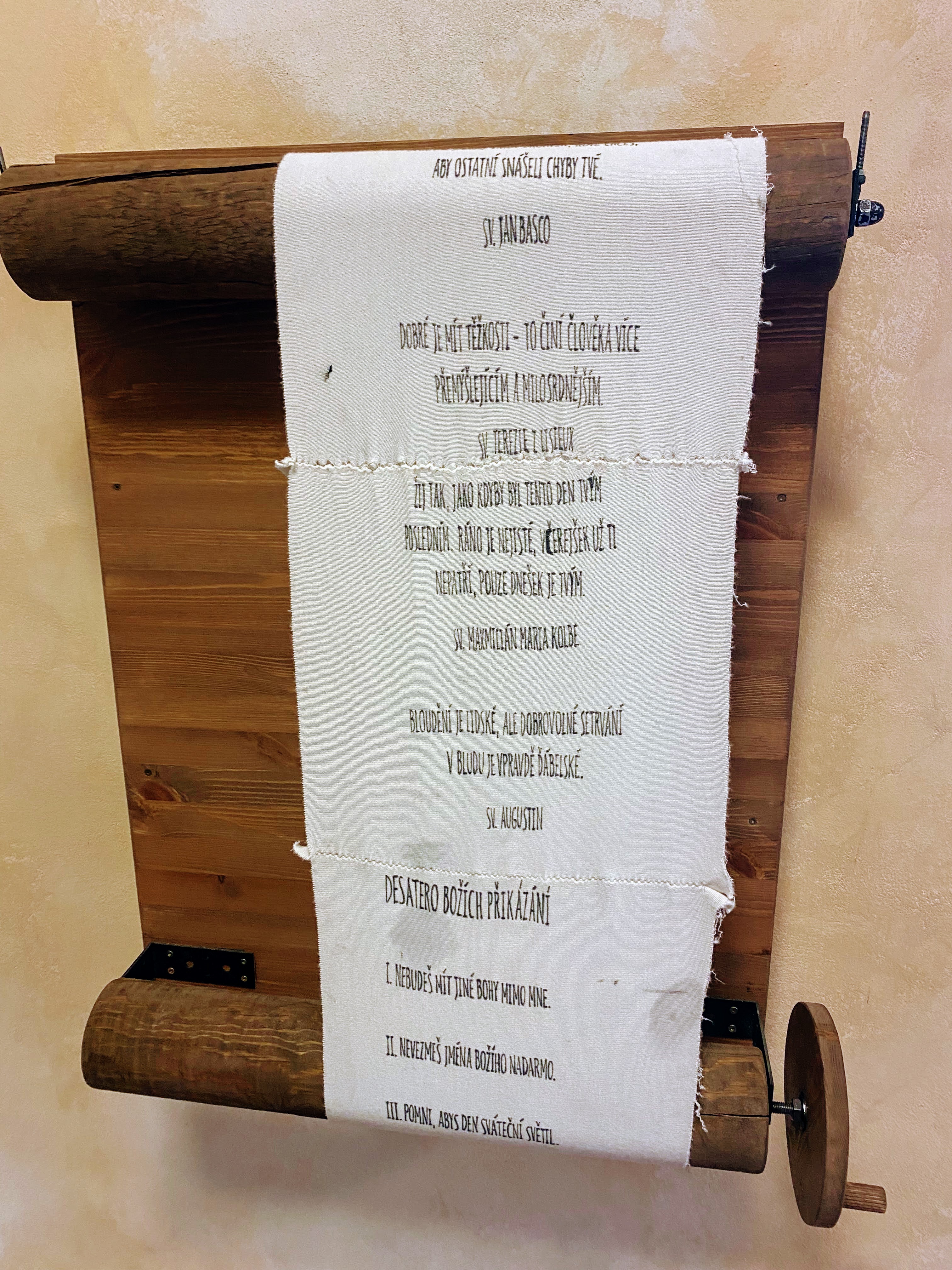
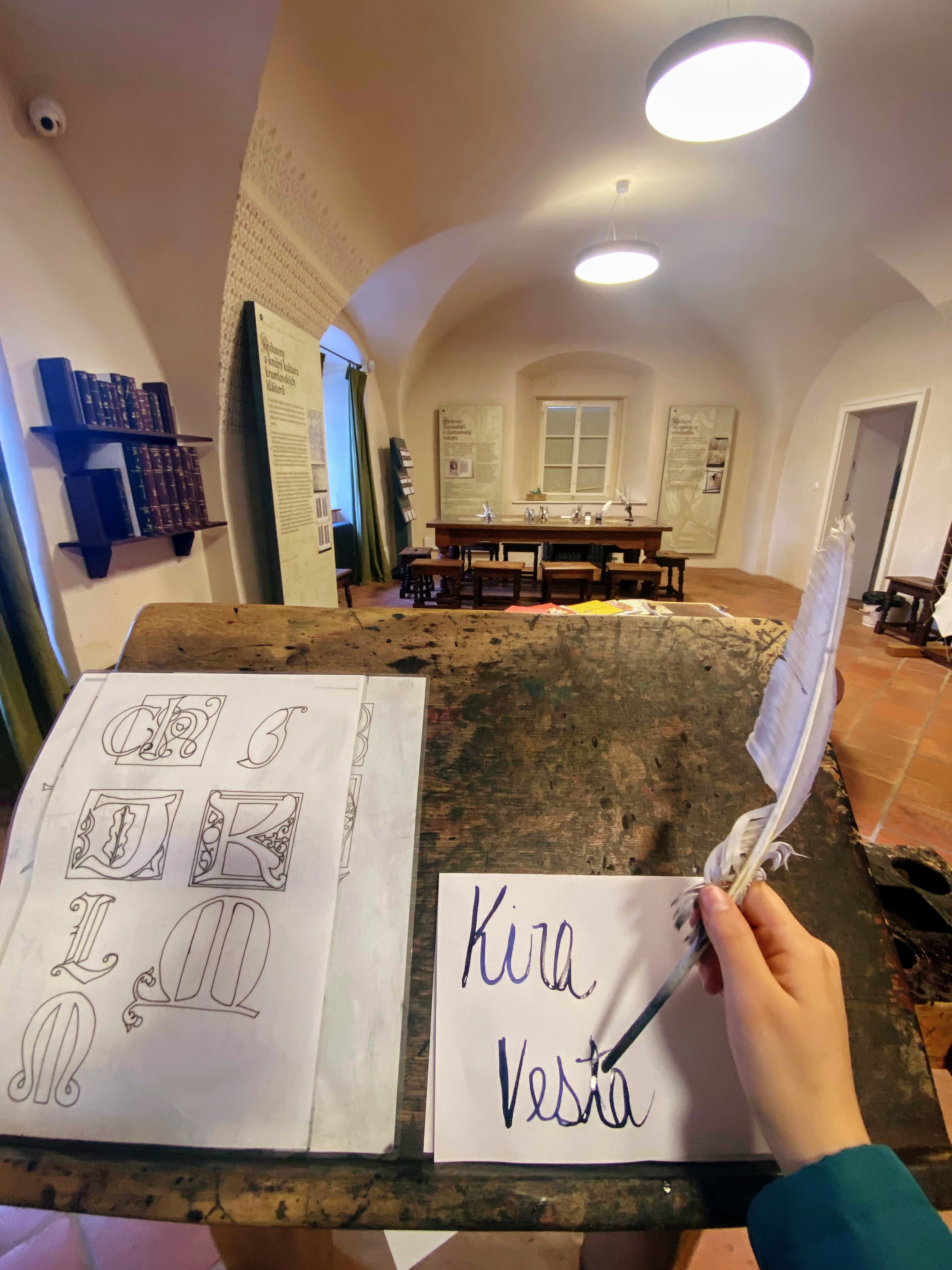
There was much more to do at the Monasteries, including the saddler, bakery, and glassmaker workshops, but I left the town earlier than my friends to attend Saturday evening Mass. It was hard to leave such a fascinating museum and quiet town, but I felt a sense of coming home on the bus back to Prague. I recommend everyone of all ages to visit Český Krumlov for the history, outdoor activities, and beauty of this town that represents just a small part of Bohemian Czech Republic.


 kira vesta
2 thoughts on “Český Krumlov”